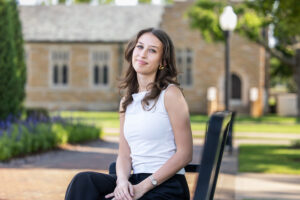
The University of Tulsa is proud to announce two recent recipients of Benjamin A. Gilman International Scholarships: Eden Knepper and Ayden Whittaker. Each year, the U.S. Department of State awards the nationally competitive Gilman awards...
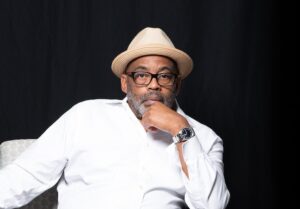
Quraysh Ali Lansana, applied associate professor of English & creative writing, is a distinguished scholar of African American studies, journalist and author of 23 books including poetry, nonfiction and children’s literature. His journey as a writer led him from Enid, Oklahoma, to studying and teaching in cities like Chicago and New York. However, after 30 […]
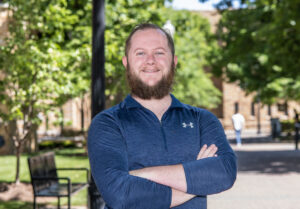
Serving nontraditional students, such as military veterans, is nothing new at The University of Tulsa, and Don Cowan’s success is a prime example of how students from all backgrounds thrive on campus. Humble and soft-spoken, Cowan (B.S. ’25) graduated from Owasso High School and served eight years as a U.S. Marine before returning to Tulsa […]
UTulsa has received a $677,000 grant from the Public Knowledge program of the Mellon Foundation to support a joint effort between the university and the Muscogee (Creek) Nation’s Historic and Cultural Preservation Department.
Along the way, Evans has received numerous awards for his scientific promise and accomplishments. Such recognition came early for this budding scientist, when, during his senior year at UTulsa, he was named a Goldwater Scholar. Throughout his doctoral studies, Evans held a National Science Foundation (NSF) Graduate Research Fellowship and, following that, he became a Schmidt Science Fellow at Columbia University.
This year, however, has proven to be particularly momentous for Evans. In the spring, he was named a Camille Dreyfus Teacher-Scholar, a national award honoring early-career faculty in the chemical sciences who have created an outstanding independent body of scholarship and are deeply committed to undergraduate education. A few months later, Evans received an NSF CAREER award to support the development of new electrochemical methods to alter polymer structure and a Presidential Early Career Award for Scientists and Engineers (PECASE). A PECASE is the highest honor bestowed by the U.S. government on scientists and engineers beginning their independent careers.
Recently, we had the pleasure of reconnecting with this accomplished alumnus. During our conversation, he shared information about his research and thoughts on how his UTulsa experiences helped forge the pathbreaking scientist he is today.
Would you give us an overview of your research area?
I am a materials chemist, and I am interested in designing the next generation of plastics. Fundamentally, we live in a materials-limited world. In order to realize the future, we need access to new materials that host new combinations of thermal, mechanical and electronic characteristics.
At UFlorida, the research we conduct in my lab is targeted at designing materials to enhance environmental, energy-storage and electronic technologies using covalent and non-covalent approaches. Our polymer technologies aim to address critical global challenges in energy, environmental and electronic applications.
What drew you to study chemistry and biochemistry at UTulsa, and then to make a career as a scientist?
I actually didn’t begin university thinking I would go on to become a chemist. I entered an engineering program, which I enjoyed, but eventually I took Dr. Gordon Purser’s chemistry course, and that really electrified my interest in science.
After that, I got involved in research through the Tulsa Undergraduate Research Challenge (TURC) and the Chemistry Summer Undergraduate Research Program (CSURP). I primarily focused on synthetic organic chemistry research with Dr. Justin Chalker, who is now at Flinders University. Together, we patented a discovery based on a material that could remove toxic metals from water.
Truly, my TURC and CSURP experiences solidified my plans to go to graduate school. I love the hands-on aspect of being in the lab and getting to see science in real time. Supporting undergraduate research is something UTulsa has always excelled at, and I definitely wouldn’t be doing the job I am today without it.
Chemistry is amazingly complex, and chemists have the peculiar handicap that we can’t directly see the particles we study. So, as professors, we teach students simplified models of chemical reality. Those models are incredibly useful, but they’re still models. The underlying reality is always way more complicated.
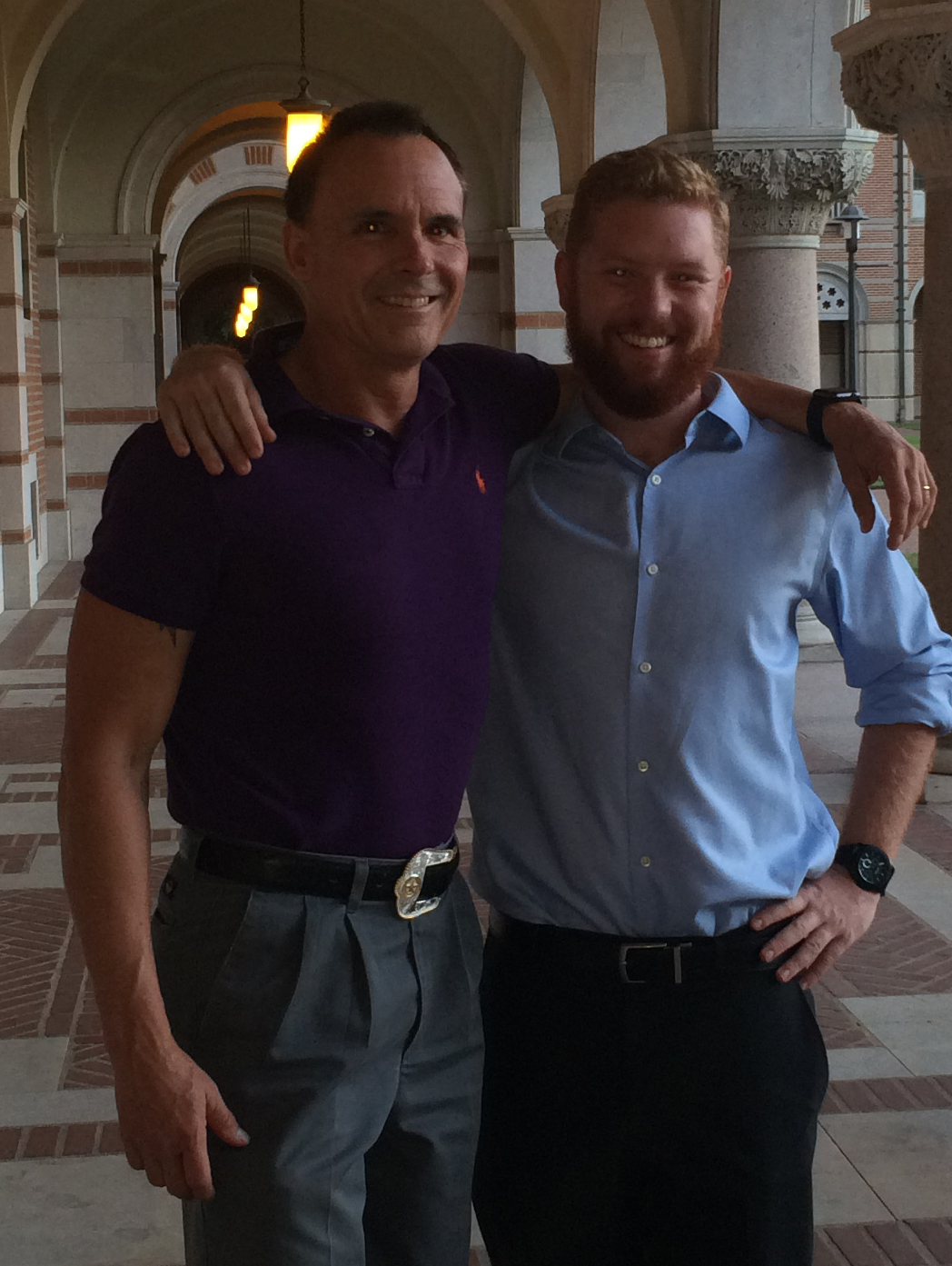
Purser (left) and Evans (right)
“What struck me about Austin was that he learned the models, and learned to use them well, but very quickly understood that they were really fictions of convenience. He wasn’t satisfied with just knowing that a model worked; he wanted to know what was really going on underneath it. And even as an undergraduate, he had this unique ability to grasp those complexities. I saw that in him pretty early on, and I knew Austin was going to become an exceptional chemist.
“As his professor, I could open the door to the idea that our models are flawed and the truth is hard. Austin was the one who walked through that door. So, while Austin may say nice things about me as a mentor, I look at it a little differently: I may have been pretty good at opening doors, but Austin was exceptional at walking through them.”
Looking back at your UTulsa years, are there any people and experiences that particularly stand out?
It’s impossible to distill my memories down to just a few people, though I have great memories of working with Professors Purser, Chalker, Erin Iski, Angus Lamar and Gabriel LeBlanc early in my scientific career. Something that’s special about UTulsa is that all of the professors are deeply invested in their students. That’s really only possible with a university that keeps the class sizes small like UTulsa does. In my view, that’s a really excellent way to drive undergraduate interest in science.
Another element I’m particularly grateful for is that all my professors encouraged me to do a study abroad experience. On the recommendation of Dr. Purser, during my second year I travelled to Munich, Germany, where I conducted research in organic materials chemistry at Ludwig Maximilian University. Munich is a beautiful city, and I lived in the Olympic Village. My time in Germany was life changing. Without that, I don’t know that I would have gone on to get my Ph.D.
I also have fond memories of Dr. Purser encouraging me to apply for some early recognition, including the Goldwater Scholarship and NSF Graduate Research Fellowship program. I probably would have never known about those opportunities if my professors hadn’t told me about them. I would have been even less qualified to win without their support. It really made a difference in my life.
Outside of chemistry, I was part of the Honors Program, which I thought was a unique and influential experience. It’s hard for students to take a rigorous science curriculum and deep humanities classes. But I think UTulsa does a really good job balancing both.
Were you involved in extracurricular activities at UTulsa?
Being a member of the Lambda Chi Alpha fraternity was a big part of my undergraduate life. Likewise, getting involved in the American Chemical Society (ACS) student chapter on campus had a major impact on me.
UTulsa is exceptional at ensuring its undergraduates get to experience the larger scientific world early in their career. I have phenomenal memories of going to ACS meetings as a young student and learning about chemistry that was happening across the world. That really opened my eyes to the fact that the world was much bigger than what was happening at my university. It also made me feel confident that I had been prepared well join that community of scholars.
And how about your life these days outside teaching and research?
I really enjoy being outdoors, especially running, biking and swimming. Incidentally, this side of me was actually inspired by Dr. Purser early in my adult life! I also recently had a son, and I enjoy spending time with him a lot.
Explore new frontiers with us
Evans’ experience is exactly the kind of personalized, supportive and engaged education that thrives across all the departments and programs at Oxley College of Health & Natural Sciences. We look forward to helping you explore new horizons and reach your full potential.

 What drew you to study chemistry and biochemistry at UTulsa, and then to make a career as a scientist?
 I also have fond memories of Dr. Purser encouraging me to apply for some early recognition, including the Goldwater Scholarship and NSF Graduate Research Fellowship program. I probably would have never known about those opportunities if my professors hadn’t told me about them. I would have been even less qualified to win without their support. It really made a difference in my life.