






The University of Tulsa’s Department of Electrical and Computer Engineering is investing more than $120,000 in laboratory upgrades designed to expand hands-on learning and prepare students for careers in a rapidly changing technology landscape.
The department has invested $40,000 in its Electronics Lab, completed in fall 2026, and $82,000 in its Test and Measurements & Circuits Lab, completed in summer 2026. Development of experiments has begun in the Test & Measurements and Circuits Lab, which is expected to be operational for students next semester.
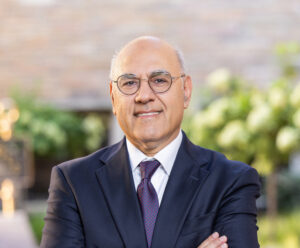
The upgrades are part of a broader effort led by Hazem Refai, Ph.D., head of the Department of Electrical & Computer Engineering, to strengthen the department’s educational and research programs by giving students access to advanced equipment and practical experiences like those found in industry and research environments.
“Laboratories become truly transformative when faculty and students use them not only to learn established concepts but also to explore and implement innovative ideas that have not previously been considered,” said Refai.
The Electronics Lab provides students with modern oscilloscopes, waveform generators and programmable power supplies. Through hands-on projects, students develop skills in electronic circuit design, analysis, testing and troubleshooting.
The department’s other laboratories expand those opportunities into emerging areas of engineering. The Secure & Sustainable Electronic Manufacturing Laboratory allows students to work through the product-development process, from circuit design and prototype fabrication to component assembly and testing. The laboratory includes laser-etching systems, micromachining tools, multilayer PCB presses, CNC machines and automated pick-and-place systems and is unique in Oklahoma.
Students also have opportunities to explore radiofrequency and optical engineering. In the Optical/RF Engineering Laboratory, students learn to design components such as antennas and low-noise amplifiers and work toward building complete RF transmitter receiver systems. The department is also working to establish an Autonomous Laboratory for research and development of autonomous systems.
Together, the laboratories support research and learning in areas including intelligent hardware design, device security and reverse engineering, AI-enabled hardware architectures, Internet of Things technologies, advanced signal processing, robotics and autonomous systems.
The hands-on approach is also reflected in student activities outside the classroom. Last year, UTulsa students participated in the IEEE Region 5 competition for robotics and electronics, where the university’s robotics team placed fourth among 25 teams.
Learning hands-on begins early in the ECE curriculum. In ECE 1011, Introduction to ECE, first-year students use sensors and a microcontroller to detect an incoming toy train and measure its speed and length. The project introduces students to embedded systems and data acquisition while giving them practical engineering experience early in their studies.
The department is also updating its curriculum to provide students with experience in areas such as secure hardware design and reverse engineering, RF engineering, embedded systems, software-defined radios, FPGA development and PCB design. Students receive development hardware kits that they can keep and use to continue developing their skills outside the classroom.
Artificial intelligence is another part of the department’s evolving curriculum. Faculty plan to introduce practical AI tools to help students develop engineering solutions in their coursework and research, giving graduates experience with AI-assisted engineering workflows.
The department’s goal is to provide students with practical, in-demand skills that complement their engineering degrees and prepare them for fields such as artificial intelligence, robotics, autonomous systems, cybersecurity and advanced manufacturing.
Looking ahead, Refai’s goals include increasing grant activity and increasing the department’s student population to 160 students.
Through continued investment in laboratory facilities, curriculum and research opportunities, the ECE Department is creating an environment where students can move from learning engineering concepts to applying them through design, testing and implementation.