
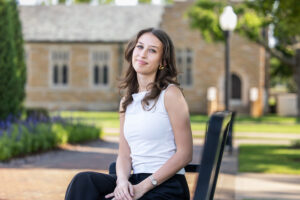

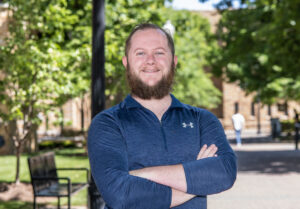

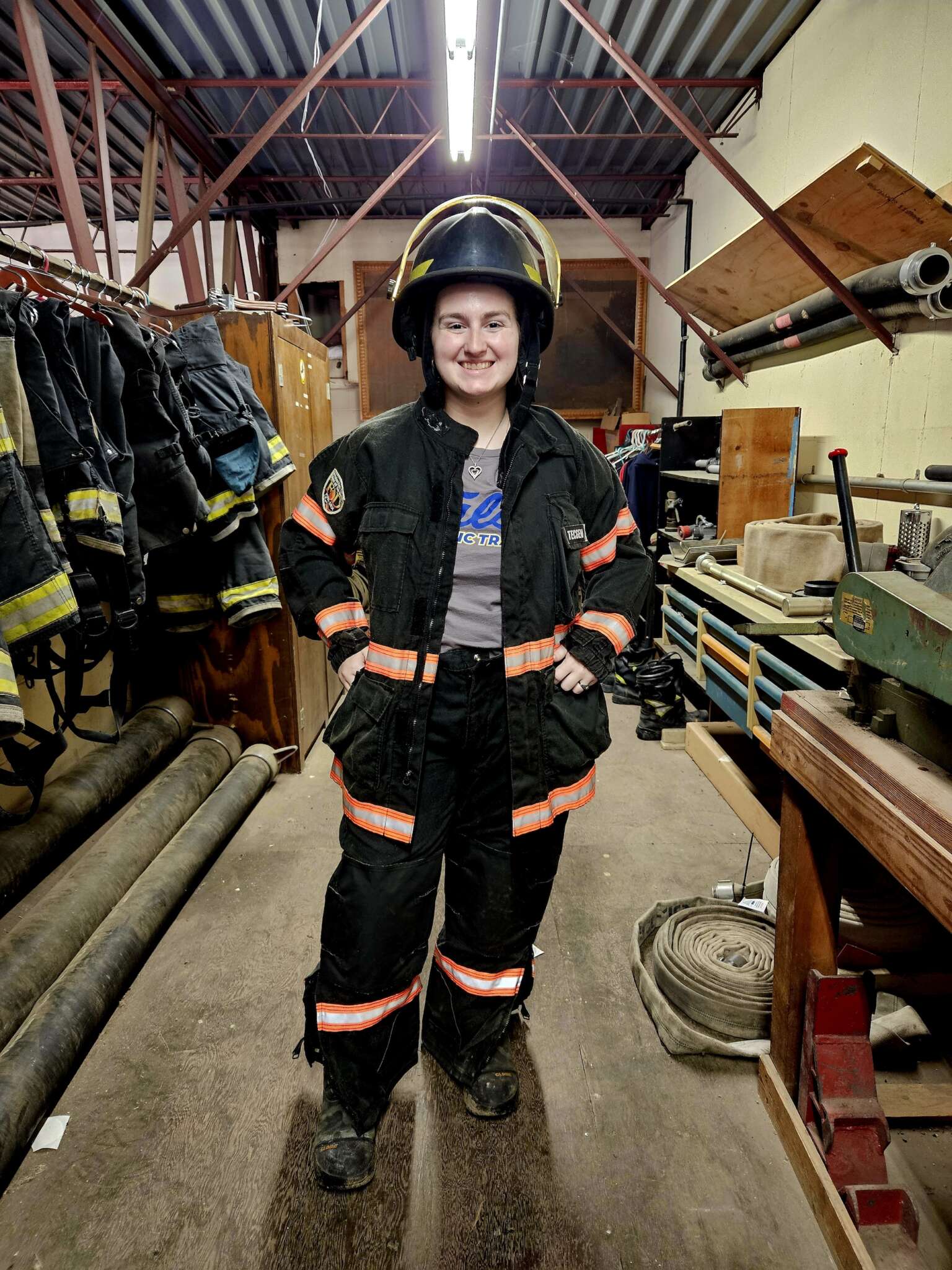
Kriztien Slackter (B.S. ’25) and Nikki Kirk are thriving in the second year of the master of athletic training (M.A.T.) program at Oxley College of Health & Natural Sciences. For both students, one of the most energizing and rewarding aspects of the program is its experiential learning component.
“The M.A.T. program has challenged me to grow as a clinician, improve my clinical decision-making and learn how to work as part of a healthcare team,” said Kirk. “The abundant hands-on opportunities to expand my knowledge, skills and experience are proving to be vital to my development, empowering me to understand at a deep and practical level the role athletic trainers play in patient care.”
The University of Tulsa’s M.A.T. program is certified by the Commission on Accreditation of Athletic Training Education (C.A.A.T.E.). A core component of the UTulsa curriculum is four 16-week clinical rotations with athletic trainers across a variety of practice settings.
During their second year, students have increased flexibility to pursue clinical experiences that align with their individual interests and career goals. “Something that really sets the UTulsa program apart from many others in the region is our students’ freedom to pursue second-year clinical placements anywhere across the United States,” noted Clinical Assistant Professor Meredith Wasson (B.S. ’09), the M.A.T. program director. Some of the organizations with which second-year students have undertaken rotations include the Los Angeles Rams, Southern Methodist University, the University of Louisville and Baylor Scott & White, the largest nonprofit health system in Texas.
From the Coast to the Heartland
Born and raised in Los Angeles, Slackter came to UTulsa to study exercise and sports science. As an undergraduate, he participated in the Golden Hurricane’s Pathway to Sports Academy. That program gave him experience assisting athletic trainers with UTulsa’s football and tennis teams. It also helped solidify his interest in forging a career supporting college athletics – in particular, football.
“I was drawn to continue on at UTulsa in the M.A.T. program in large part because of my amazing undergrad experience,” he said. “I enjoyed being part of a close-knit community of students and professors, I made great connections, and I learned so much from my athletic training internships with outstanding organizations, such as Jenks High School and FC Tulsa.”
As an M.A.T. student, one of Slackter’s most energizing rotations was on campus with the women’s volleyball team. He was supervised by Gabriel Machado, assistant athletic trainer with UTulsa’s volleyball and men’s golf teams. “Kriztien was always focused, enthusiastic and open to learn on every occasion,” noted Machado. “Even though he was only in his first year of the master’s program, he showed a lot of skill right off the bat and was confident with what he was doing. In addition, his interpersonal skills made the players comfortable, which is an important ability to have in this career.”
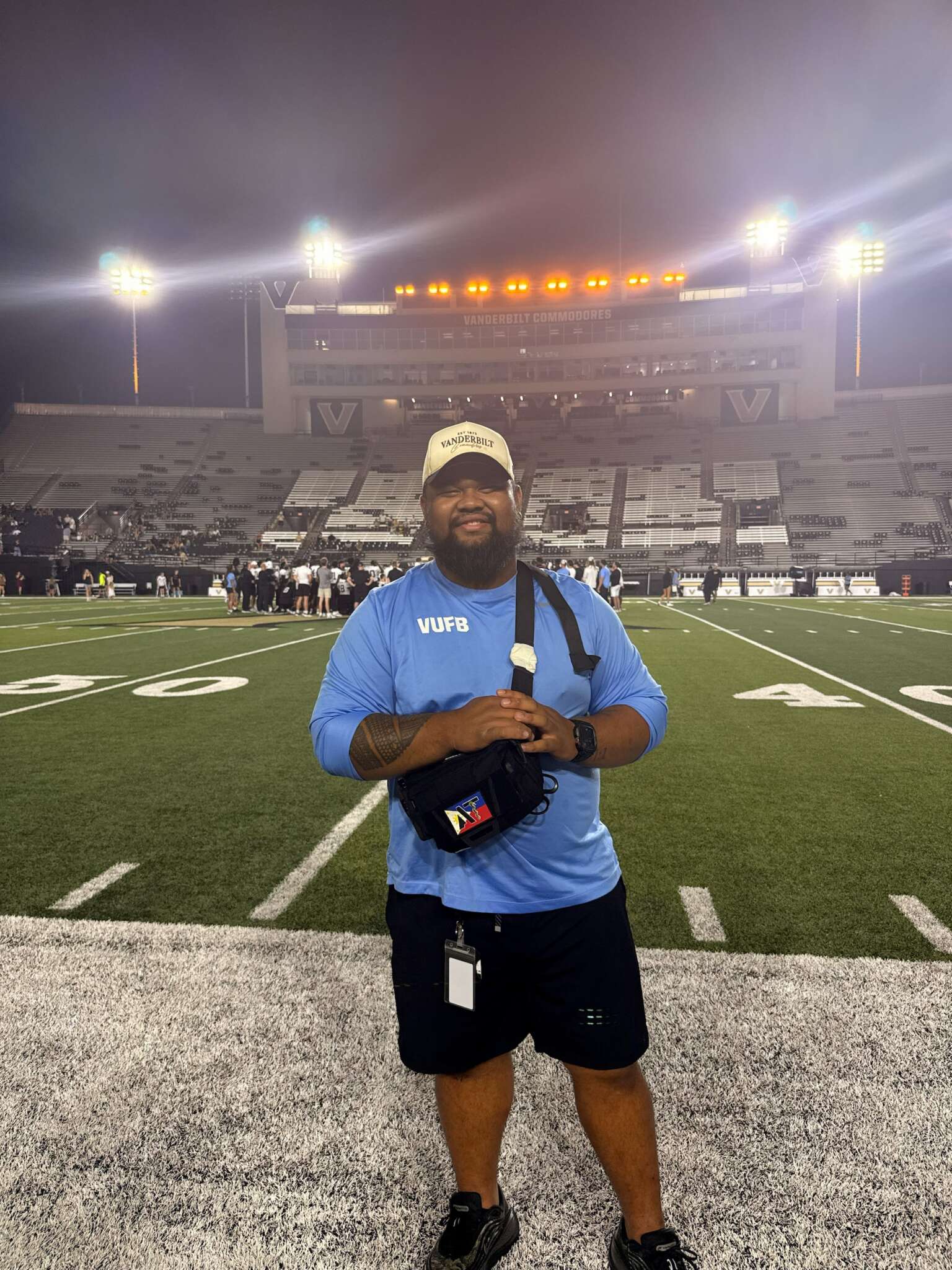
Currently, Slackter is deepening his immersion in the world of athletic training through a full-year clinical placement with Vanderbilt University’s Southeastern Conference NCAA Division I football team. One of his main responsibilities is creating and adjusting rehabilitation plans for players and providing on-site care at both home and away games. “It’s inspiring being able to expand my knowledge and skills in a high-level SEC setting that’s centered on athlete care, performance and continuous improvement, working alongside athletic trainers who have worked in the NFL with teams like the New England Patriots, Indianapolis Colts and New York Jets,” he remarked.
Looking ahead, Slackter wants to build his career as a healthcare professional in a high-performance environment. “It would be a dream come true to work in professional sports,” he said. “I’m open to the NFL, NBA or even the WWE. Wherever I land, my goal is to help high-level athletes stay safe and healthy so they can achieve their full potential.”
Commitment to care
Kirk’s first clinical rotation – from January to May 2026 – was at Coweta High School, 25 miles southeast of Tulsa, where she performed various roles:
- Evaluating injuries and implementing treatment plans
- Assisting with athletes’ rehabilitation exercises and monitoring their progress
- Taping, wrapping and bracing injured limbs
- Providing preventive care
- Documenting injuries, treatments and referrals
- Delivering sideline coverage and immediate care during athletic practices and events
- Communicating athletes’ status to coaches and athletic trainers
“During her time with us, Nikki was a fantastic student and addition to our team,” said Meghan Gaines, an athletic trainer at Coweta. “I still recall our first meeting, where Nikki outlined her clinical goals of building her skills in evaluations and treatments of the orthopedic injuries she would encounter. During her time with us, not only were we able to see those skills build, but her confidence as well!”
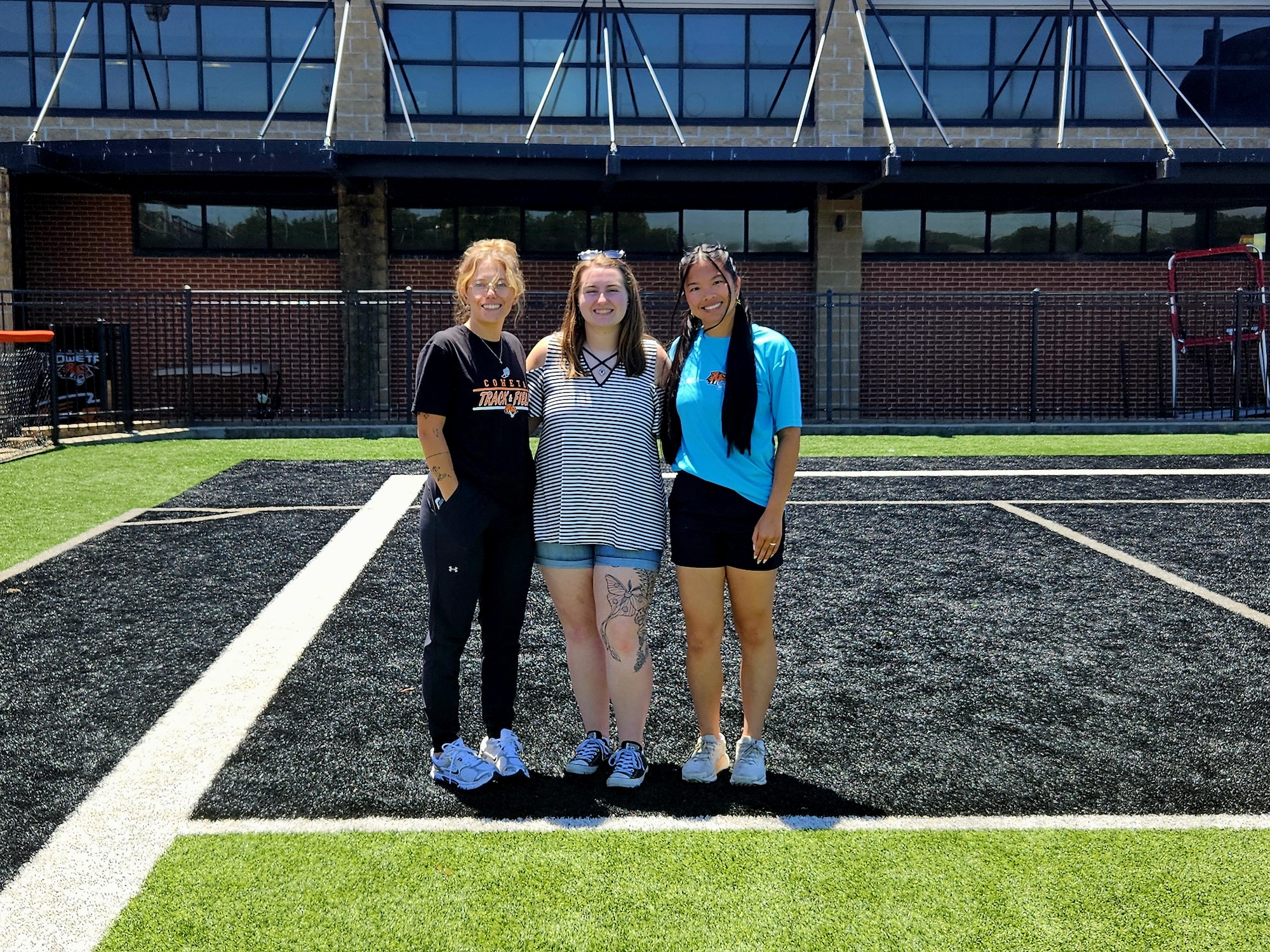
Kaleigh Novello, another athletic trainer at Coweta, concurred: “Nikki displayed a great passion for helping people and was eager to learn about musculoskeletal conditions in sport. She embraced each day’s new challenges, using them as opportunities for growth. Working with Nikki was a terrific experience, and we and our students miss her. I know she will do great things!”
Kirk’s current clinical practice is at Tahlequah High School. This is somewhat of a double homecoming for Kirk: A citizen of the Cherokee Nation who was born and raised in Tahlequah, she completed a clinical experience at the same high school during her undergraduate studies in health and human performance at Northeastern State University. “I’m really enjoying working alongside the Tahlequah Tigers’ coaches and athletic training staff this fall,” she said. “And I can clearly see how UTulsa’s M.A.T. program has broadened my perspectives on patient care and made me more confident in my skills and clinical decision-making.”
Once she graduates, Kirk has her sights set on acing the Board of Certification exam so that she can practice as a certified athletic trainer, ideally focusing on sports medicine and orthopedic care. “I also want to continue developing my clinical skills, especially in injury evaluation, rehabilitation, emergency care and patient education,” she remarked. Long term, she envisions taking on leadership opportunities in the field and, importantly for this first-generation college student, “giving back to the communities that have supported me throughout my education and career.”
Set and achieve your goals
Athletic trainers help people of all ages prevent and recover from bone, joint and muscle injuries. The demand for their services is growing by leaps and bounds – projected to increase by 13% during the next decade.
Oxley College offers you two routes to this exciting career: a five-year accelerated bachelor’s to master’s program and a two-year post-baccalaureate master’s program. Either way, you’ll be prepared to expertly prevent, evaluate, diagnose and rehabilitate injuries and illnesses.