






For many undergraduate students, access to meaningful research opportunities can be limited, particularly at smaller institutions and community colleges where hands-on research is not always part of the undergraduate experience. Through a National Science Foundation (NSF) Research Experiences for Undergraduates (REU) award, The University of Tulsa is attracting talented students from across the country to engage in cutting-edge research on materials for energy transition while contributing to the university’s growing reputation for research excellence.

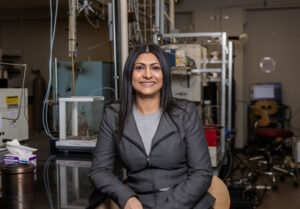
The three-year program is led by Laura P. Ford, Ph.D., associate professor of chemical engineering, and co-principal investigator Hema Ramsurn, Ph.D., who serves as the A. Paul Buthod Endowed Chair in Chemical Engineering. The program provides undergraduate students with the opportunity to work alongside faculty mentors on high-impact research projects, gain exposure to graduate education and explore careers in research and innovation.
One of the program’s primary goals is to introduce students to the research enterprise and help them determine whether graduate school and research careers align with their professional aspirations.
“The idea is to give students an opportunity to try research, and then hopefully they like it and want to go on to graduate school,” Ford said.
The program also advances UTulsa’s broader research mission by supporting faculty scholarship, strengthening research teams and expanding pathways for recruiting talented students into graduate programs.
“This NSF REU award is a strong endorsement of the quality, relevance and national competitiveness of our research enterprise,” said Dean Andreas A. Polycarpou. “By bringing exceptional undergraduate researchers to UTulsa to work alongside our faculty on critical energy-transition challenges, we are strengthening our research ecosystem, expanding our pipeline of future graduate students and researchers and enhancing the college’s visibility among peer institutions. Programs of this caliber are hallmarks of leading research universities and contribute directly to our reputation for research excellence.”
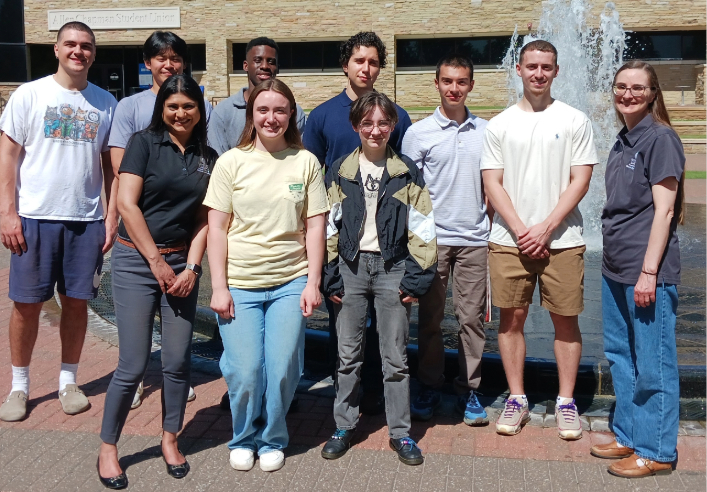
This year’s cohort included 10 highly qualified students from Washington, California, Pennsylvania, New York and other states, reflecting the program’s growing national reach. Working alongside UTulsa faculty, participants contributed to research addressing some of the most pressing energy-transition challenges facing society. Their projects explored topics ranging from advanced battery technologies and wind energy to carbon storage and innovative approaches for converting methane into valuable products.
The program connects undergraduates with real-world challenges through laboratory research and industry engagement. Participants visited energy-related facilities across Oklahoma to observe emerging technologies and learn about their practical applications. During a visit to a wind farm, students examined a retired wind turbine blade and observed the wear and erosion that can affect long-term performance. Additional outings introduced students to carbon capture and storage operations as well as companies developing next-generation energy technologies.

Ty Johannes, Ph.D., who serves as the Wayne B. Rumley Endowed Chair in Chemical Engineering and department head, noted that these experiences distinguish the program from many undergraduate research opportunities across the country.
“One comment from an REU student really stuck with me,” Johannes said. “The student said they had talked with friends participating in REU programs at universities across the country, and they felt that the field trips, sense of community and camaraderie in our program were especially meaningful.”
The program’s impact is already evident. Six participants are preparing presentations for national conferences, creating opportunities to showcase research conducted at UTulsa to broader scholarly audiences. Several students are also pursuing graduate education, further demonstrating the program’s success in developing the next generation of researchers and innovators. Students additionally build lasting professional networks with faculty mentors, industry partners and fellow researchers.
With two years of NSF funding remaining, the program will continue to attract top undergraduate talent to UTulsa, expand research opportunities in energy-transition technologies and strengthen the university’s position as a destination for impactful, nationally recognized research. Through initiatives such as the NSF REU program, UTulsa continues to elevate its national research profile, increase scholarly productivity and enhance the visibility and reputation that distinguish leading research institutions.
Learn more about the Materials for Energy Transition Research Experiences for Undergraduates program and the Ford Research Group at UTulsa through the MET REU Program.
This work is supported by the National Science Foundation under Grant No. 2447543. Any opinions, findings, conclusions or recommendations expressed in this material are those of the author(s) and do not necessarily reflect the views of the U.S. National Science Foundation.