


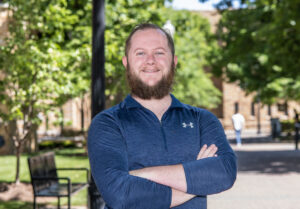


After a decade of research, University of Tulsa historian Kristen Oertel’s newest book offers the first comprehensive study of slavery, resistance and sovereignty across the Five Tribes. Covering 1790 to 1861, “Seeking Freedom in Indian Country: Slavery, Sovereignty and Resistance Within the Five Tribes” explores the adoption of Black chattel slavery after the American Revolution, the forced removal of Black and Native people, and the reestablishment of the slave economy in Indian Territory.

Oertel, who chairs the Department of History in Kendall College of Arts & Sciences, was inspired to take on the project after moving from Mississippi to Tulsa 16 years ago. “When I first moved to Oklahoma, I noticed strong Southern influences in the state’s history,” she said. “Later, the National Park Service asked whether there were Underground Railroad stops in Indian Territory. That question led me to begin my research.”
Through her connection to Gilcrease Museum and the Helmerich Center for American Research, Oertel discovered numerous manuscripts documenting slavery in Indian Territory and the ways that enslaved people resisted by traveling south to Mexico, where slavery had been abolished.
Much of this history remains unfamiliar to many Americans. “Even many Oklahomans don’t know that members of the Five Tribes enslaved African people,” said Oertel. “Although it’s a difficult history, it’s an essential part of understanding how these nations rebuilt after removal.”
Beyond the difficult discussions of slavery and removal, the story centers on shared culture and trauma across multiple nations and communities. This added complexity required Oertel to balance her in-depth research with teaching and administrative responsibilities.
The book is not only about oppression but also resistance, resilience and survival. “This history demonstrates that, despite immense challenges, Indigenous and African-descended people survived and built thriving communities,” said Oertel. “It’s also an inspiring story that highlights a rich Afro-Indigenous culture that deserves wider recognition.”
Explore all the ways the past can inform our future at https://utulsa.edu/programs/history/