




For 16 years, University of Tulsa Professor of Mathematics Richard Redner has helped colleges and universities across the country regarding accreditation, academic programs and institutional quality. The Higher Learning Commission has called on him 82 times, and Redner has said yes 79. That record of service has earned him HLC’s 2026 Clutch Collaborator Award, which recognizes a peer reviewer known for stepping in when needed, whether for a short-notice review, a tight deadline or an unexpected change in plans.
Four years ago, Redner volunteered to be available for short-notice assignments, adding another level of commitment to service that began with his first HLC assignment in fall 2010.
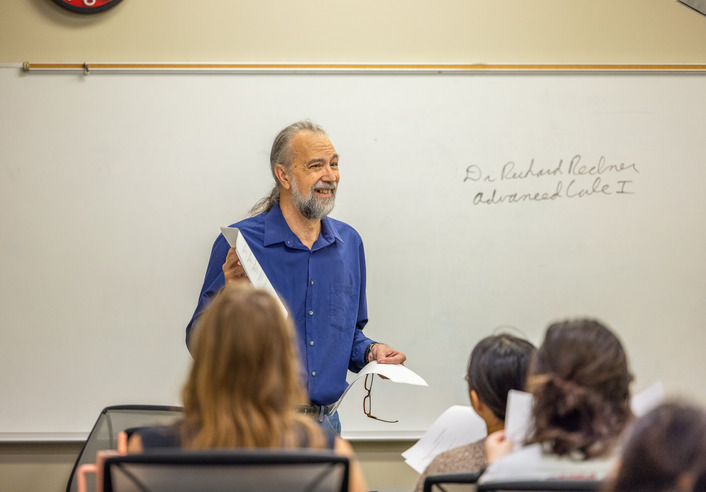
“It is very meaningful to me that the HLC values my work,” Redner said. “I am so pleased that I have been entrusted, along with my very well-qualified peers, with this responsibility. Given the exceptional quality of the work done by other peer reviewers, it is very rewarding for my work to receive special recognition.”
HLC accredits nearly 1,000 colleges and universities in the United States, making Redner’s service part of a broader effort to strengthen the quality of American higher education. Peer reviewers bring experience from their own institutions to evaluate academic quality, institutional planning and proposed changes at other universities, while gaining firsthand knowledge of the challenges, practices and ideas shaping higher education across the country. Redner has served on teams reviewing whether institutions continue to meet HLC’s criteria for accreditation; participated in institutional change and focused visits; reviewed proposals for new and significantly revised degree programs; and visited off-campus locations to confirm they meet accreditation standards. Since 2017, he also has served on HLC’s Institutional Actions Council, which reviews recommendations from peer-review teams and takes action on accreditation matters or makes recommendations to HLC’s Board of Trustees. Redner has served as a member, secretary and chair for virtual IAC meetings and hearing committees.
Those responsibilities have given Redner a broad view of how institutions approach leadership, planning, assessment, academic programs and student success. “Through my peer-review activities, I get to work with some of the most talented faculty and leaders in higher education,” Redner said. “Committees include experienced faculty, staff and administrators who have served in multiple roles, including vice presidents and presidents of institutions. It is a great pleasure to have the opportunity to work with such distinguished colleagues.”
The exchange of expertise works both ways. Redner brings his experience as a UTulsa faculty member to institutions across the country while returning with new ideas and perspectives that can inform his work at home. For UTulsa, his 16 years of service provide a faculty voice contributing to institutional quality beyond the university and a connection to practices and perspectives from across higher education. “Personally, I learn something new every time I participate in an HLC activity,” he said. “I have learned a great deal about leadership, planning and assessment in particular. Over the years, I have been able to bring these ideas back to UTulsa, the College of Engineering & Computer Science and the Math Department.”
Amy N. Schachle, interim head of mathematics and instructional associate professor, agreed. “Dr. Redner’s recognition by the HLC is well-deserved,” she said. “His wealth of experience as a peer reviewer continues to be of immense value to our university and our department.”
Redner describes his HLC work as “the greatest possible faculty development experience,” an opportunity to contribute his own knowledge while learning from colleagues who bring years of experience from institutions throughout higher education. “The peer reviewer corps works hard to help institutions satisfy their mission, be successful as institutions and have successful students,” he said. “As peers and colleagues, we can bring external experience to the tasks at hand.” That commitment has been recognized before. In 2023, Redner received HLC’s Virtual Master Award, which recognizes peer reviewers who frequently serve on virtual reviews and demonstrate proficiency with the organization’s online review processes and technologies. He was nominated for the honor by HLC staff.
For Redner, the value of 16 years of service goes beyond the awards. It comes from contributing to the success of other institutions while bringing what he learns from colleagues across higher education back to UTulsa. “I have noted with great pleasure the depth of the investment that faculty and administrators have made to their home institutions,” Redner said. “My colleagues with HLC accreditation are serious and committed to their work and to the success of their students.”