






As energy systems become increasingly interconnected and complex, addressing the challenges of the future requires collaboration across technical, economic, policy and community stakeholders. The ROSA Energy Conference was created to foster those connections, bringing together leaders from industry, tribal nations, government, academia and the nonprofit sector to explore the opportunities and challenges shaping the future of energy.
The conference originated from a simple observation. Despite Oklahoma’s longstanding leadership in energy production, innovation and infrastructure, many national conversations about the future of energy were taking place without broad representation from stakeholders across the region. ROSA was established to elevate those voices and create a forum where diverse perspectives could engage in meaningful dialogue, share expertise and identify opportunities for collaboration.
What began as an idea has grown into a unique interdisciplinary platform focused not only on energy production, but also on workforce development, economic growth, infrastructure planning, technological innovation, community engagement and long-term sustainability. By bringing together decision-makers and experts who do not often occupy the same space, the conference seeks to advance solutions that balance technical, economic and societal priorities.

For Andreas A. Polycarpou, Ph.D., dean of the College of Engineering & Computer Science, the conference reflects the interdisciplinary nature of modern energy systems and the importance of partnerships in driving innovation.
“The energy challenges of the future will not be solved within disciplinary silos. They require engineering innovation, business strategy, policy expertise, community engagement and deep collaboration among industry, tribal nations, government and academia,” Polycarpou said. “ROSA exemplifies UTulsa’s leadership in convening these diverse perspectives to address complex energy challenges while advancing research, workforce development and sustainable economic growth. Conferences like ROSA strengthen our role as a national partner in shaping the future of energy.”

Buford Pollett, who serves as the Genave King Rogers Associate Professor of Energy Law and Commerce in UTulsa’s Collins College of Business and is one of the conference organizers, said ROSA was built on Oklahoma’s unique combination of energy expertise, entrepreneurial spirit and longstanding relationships among industry, government and tribal nations.
“There are conversations that need to be had,” Pollett said. “To the extent tribal nations, municipalities, the state and local communities work together, the region offers a lot of opportunity for economic growth and vitality, not just for current generations, but future generations.”
Throughout the conference, participants explored topics ranging from tribal sovereignty and workforce development to transmission infrastructure, energy policy, artificial intelligence, data centers and long-term energy planning. Discussions highlighted the importance of engaging communities early in the development process and building trust among stakeholders before major projects move forward.

“You have to engage a community before you tell them this is how it will be,” Pollett said. “You can’t just go in and say, ‘We’re building this.’ You have to engage people earlier.”
Workforce development emerged as one of the conference’s central themes. Participants emphasized the need to strengthen pathways linking K-12 education, tribal communities, universities, internships and industry careers. The discussions underscored the growing demand for professionals whose expertise spans engineering, data analytics, business, public policy and emerging energy technologies.
Attendees also examined the rapidly evolving role of artificial intelligence, data centers and next-generation energy infrastructure. Conversations focused not only on the technologies themselves, but also on issues of power demand, grid resilience, economic competitiveness, workforce readiness and community impacts associated with large-scale investments.
Rather than seeking immediate consensus, conference participants used ROSA as an opportunity to exchange perspectives, identify areas of alignment and build relationships that can support future collaboration. As discussions progressed, attendees highlighted opportunities for continued engagement, including tribal-industry partnerships, workforce initiatives, improved access to energy-related information, greater tribal participation in energy planning and enhanced university involvement in evaluating complex energy opportunities.
Universities were widely recognized as critical partners in addressing future energy challenges through research, innovation, talent development and objective technical expertise. Faculty members from across UTulsa contributed perspectives spanning engineering, business, law, policy and community engagement, reinforcing the university’s role as a trusted convener and thought leader within the rapidly evolving energy ecosystem.
Pollett said future conferences will build on the momentum established during ROSA 2026.
“Nobody’s going to take you full tilt until you actually deliver on the little things,” he said. “To the extent you can build trust and do it in small incremental steps, then you can do bigger things together.”

For Akhilesh Bajaj, Ph.D., Genave King Rogers Dean of the Collins College of Business, the conference demonstrates the value of integrating perspectives when addressing energy challenges.
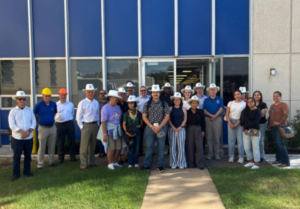
“ROSA demonstrates that successful energy projects require technical, business and legal expertise working together,” Bajaj said. “For the Collins College of Business, the conference connects classroom concepts such as investment evaluation, risk management and strategic partnerships with real-world decisions shaping the energy sector.”
The breadth of organizations represented at ROSA underscores Oklahoma’s strategic role in America’s energy future and highlights UTulsa’s ability to convene stakeholders around critical issues ranging from traditional energy development and infrastructure to artificial intelligence, advanced technologies and workforce transformation.
As ROSA continues to grow, organizers envision the conference becoming a leading regional forum for advancing collaboration across the energy sector. By bringing together industry executives, tribal leaders, policymakers, researchers, students and community stakeholders, the conference demonstrates how innovative partnerships can accelerate economic opportunity, strengthen workforce pipelines and advance energy solutions for future generations.
Learn more about UTulsa’s highly ranked energy programs and opportunities in energy innovation, research and industry engagement at https://utulsa.edu/programs/energy/.