





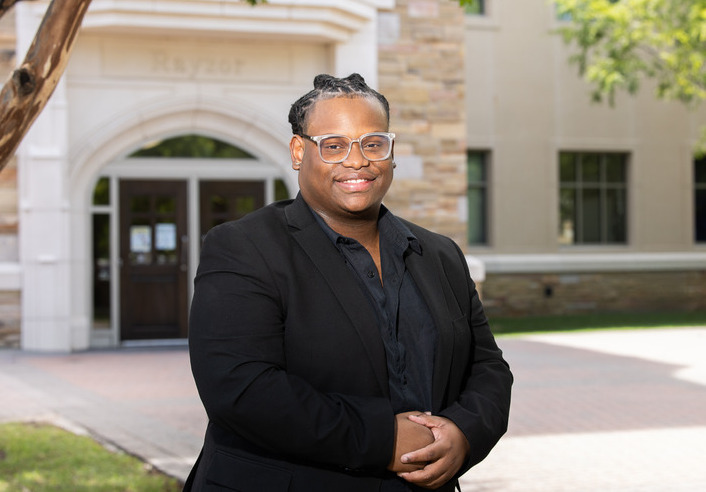
For University of Tulsa graduate student Jalen Brown, cybersecurity is more than a field of study. It is an opportunity to contribute to one of the nation’s most consequential and rapidly evolving disciplines while addressing real-world challenges in digital security and cybercrime.
Brown, who earned his bachelor’s degree in cybersecurity from UTulsa in just two and a half years and is now pursuing a master’s degree while conducting digital forensics research, was recently selected as a 2026 RSAC Security Scholar. The highly competitive program provides students from a select group of universities with an all-expense-paid opportunity to attend the RSA Conference, one of the world’s premier cybersecurity events, and engage directly with leading researchers, practitioners, innovators and policymakers.
The 2026 conference attracted more than 43,500 attendees from over 100 countries, providing unparalleled exposure to the global cybersecurity community. Within that larger gathering, Security Scholars participate in exclusive networking and professional development opportunities designed specifically for the nation’s most promising cybersecurity students.
UTulsa is one of only 38 universities nationwide, and the only university in Oklahoma, invited to participate in the RSAC Security Scholar program. The invitation reflects the national reputation of UTulsa’s School of Cyber Studies and its longstanding leadership in cybersecurity education, research, digital forensics and industry engagement.
“It’s an outstanding opportunity for some of the best and brightest UTulsa cyber students to meet current and future leaders while immersing themselves in the latest technologies and trends in cybersecurity,” said Tyler Moore, Ph.D., who serves as the Tandy Endowed Chair in Cyber Security and Information Assurance and Brown’s adviser.
For Brown, one of the most valuable aspects of the experience was the opportunity to engage directly with leaders across academia, industry and government.
“One of my biggest takeaways was just how vast the field of cybersecurity truly is,” he said. “Speaking with professionals and students from diverse backgrounds, each with their own experiences, interests and expertise, gave me an even greater appreciation for both the field itself and the people whose work continues to shape its future.”
Brown attended the RSA Conference not simply as a student, but as an active researcher. His work at UTulsa focuses on digital forensics and the analysis of Internet of Things (IoT) devices, an area of growing importance as connected technologies become increasingly integrated into everyday life.
Through research sponsored by the National Computer Forensics Institute (NCFI), Brown performs system-on-chip extractions on commonly used devices, analyzes the resulting data and develops methodologies that can support future digital forensic investigations. The work contributes to broader efforts to improve the ability of investigators to recover and interpret digital evidence from emerging technologies.
The conference gave Brown an opportunity to discuss his research with cybersecurity professionals and fellow researchers from across the country, connecting work underway in Tulsa to national conversations about digital evidence, cybercrime and cybersecurity resilience.
Research is one component of a broader experiential learning environment within UTulsa’s School of Cyber Studies. Students regularly work alongside faculty and doctoral researchers, participate in national cyber competitions, gain operational experience through the university’s Security Operations Center and engage directly with industry and government partners.
“We consciously cultivate opportunities for our students to gain practical experience that complements what they learn in the classroom,” Moore said. “These experiences help students develop the technical expertise and professional skills needed to become leaders in the field.”
For Brown, those opportunities have shaped his future.
“Attending RSAC and having the opportunity to speak with so many accomplished professionals in a personal setting helped me better understand the different career paths within cybersecurity,” he said. “Those conversations solidified my decision to pursue a Ph.D. and confirmed that I want to focus my research and career on digital forensics.”
Brown credits UTulsa’s combination of rigorous academics, faculty mentorship and hands-on research opportunities for helping him reach that point.
“The University of Tulsa has an outstanding reputation, so I came in with very high expectations, and it has exceeded them,” he said. “Beyond the coursework, the faculty have provided opportunities for hands-on research, professional development and mentorship that have been invaluable in preparing me for the next stage of my career.”
His selection as an RSAC Security Scholar highlights his individual accomplishments and reflects UTulsa’s commitment to developing the next generation of cybersecurity leaders, researchers and innovators. As Brown prepares to pursue doctoral studies, he represents the type of student talent that increasingly distinguishes UTulsa’s nationally recognized cybersecurity program.