

For a team of students in The University of Tulsa’s College of Engineering & Computer Science, a senior design project became much more than an engineering exercise. It became an opportunity to change a young girl’s life.
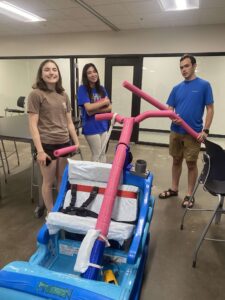
Through UTulsa’s Make A Difference Engineering (MADE) program, students partnered with the family of Callie Fuentes, a young girl with cerebral palsy, to adapt an electric ride-on vehicle that would allow her to participate more fully in activities with family and friends.
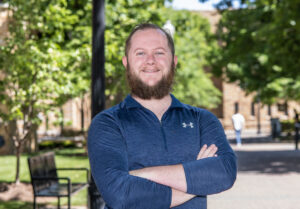
The project, known as Sven’s Friends, had been underway for several years and passed through multiple student teams. Despite significant effort, key technical challenges remained unresolved. When Wynn Brown, a mechanical engineering sophomore from Edmond, joined the project, he assembled a multidisciplinary team of mechanical and electrical engineering students determined to bring the project across the finish line.
“We tried to figure out what the problem was and take it from our own angle,” Brown said.
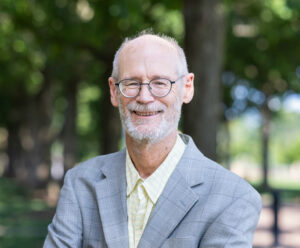
The team worked under the leadership of John Henshaw, Ph.D., who serves as the Harry H. Rogers Endowed Chair in Mechanical Engineering. Through the MADE program, Henshaw has created opportunities for students to apply their engineering skills to meet real community needs while gaining hands-on experience. The program connects engineering students with community partners to develop practical solutions that improve lives.
“That project really needed a shot in the arm, and Wynn’s team gave it that,” Henshaw said.
The turning point came when the students met Callie and her mother, Ciara Fuentes.
Until then, the project was primarily a technical challenge. Meeting the family provided a deeper sense of purpose and helped the students understand the impact their work could have.
“As soon as we met her, it felt like things started really picking up,” Brown said. “Knowing who you’re working for changes everything.”
The team redesigned multiple aspects of the vehicle to meet Callie’s specific needs. They modified the steering and control systems so her mother could safely guide the vehicle while walking alongside her daughter. They also redesigned the seating system, adding customized supports and adjusting the seat angle to improve comfort and stability.
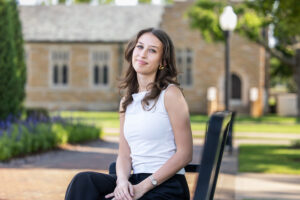
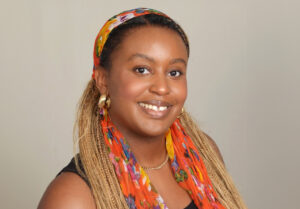
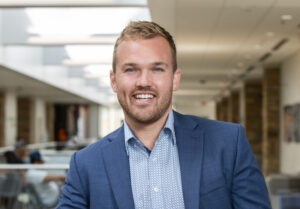
Jehovany Sanchez, a mechanical engineering junior from Tulsa, helped build a custom seat structure, while Allie Dina, a mechanical engineering sophomore from Olive Branch, Mississippi, spent weeks designing and refining 3D-printed components for the steering system.
Throughout the semester, students repeatedly tested, redesigned and improved the vehicle, overcoming numerous technical challenges while keeping their focus on the child who would ultimately benefit from their work.
On delivery day, the team gathered outside with the completed vehicle, eagerly awaiting Callie’s arrival.
“The whole semester of work, work, work, we were ready to finally deliver it,” said Annabella Romero, a mechanical engineering sophomore from Houston.
When Callie climbed into the vehicle and it began moving as intended, the students witnessed the moment they had been working toward for months.
“The smile on both of their faces was fantastic,” Dina said. “Most of us were a little nervous, hoping it was going to go right. Then she got in the seat, it started moving, and she had this huge smile.”

For the students, that reaction was the true measure of success.
Beyond solving an engineering problem, the project opened new opportunities for Callie to participate in activities with friends, cousins and family members that had previously been difficult or impossible.
Callie’s mother “said that this project would allow her daughter to not only play with them, but enjoy more time with their family,” Sanchez recalled.
The project exemplifies the mission of UTulsa’s MADE program: empowering students to use engineering to make a meaningful difference in the community while developing the technical, creative and leadership skills that define exceptional engineers.
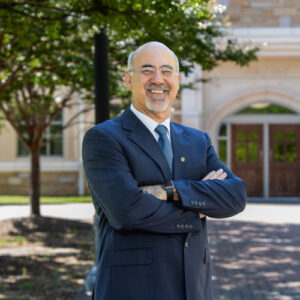
“This is engineering at its best,” said Andreas A. Polycarpou, Ph.D., who serves as dean of the College of Engineering & Computer Science. “Under Henshaw’s leadership, our students combined technical excellence, creativity and compassion to create a solution that will have a lasting impact on Callie’s life. Projects like this demonstrate how engineering can transform communities one life at a time.”