



Ancient artworks are more than historical records. They can also serve as scientific time capsules. Researchers at The University of Tulsa and Gilcrease Museum are combining expertise in chemistry, physics, engineering and art conservation to examine pigments in 16th-century Indigenous Mexican manuscripts. Using advanced Raman microscopy, this interdisciplinary team is uncovering clues about the materials, techniques and scientific knowledge behind their creation while helping preserve these important cultural items for future generations.

Ancient artifacts can take us back in time, providing a window into the past that is difficult to replicate through textbooks alone. But what happens when historians, conservators, chemists, physicists and engineers look at the same artifact together?
At The University of Tulsa and the Helmerich Center for American Research at Gilcrease, that kind of interdisciplinary collaboration is revealing information that no single field could uncover on its own.
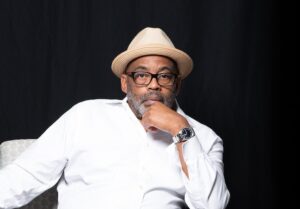
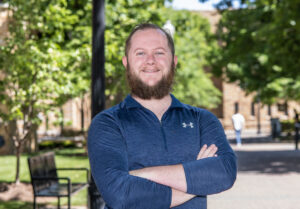
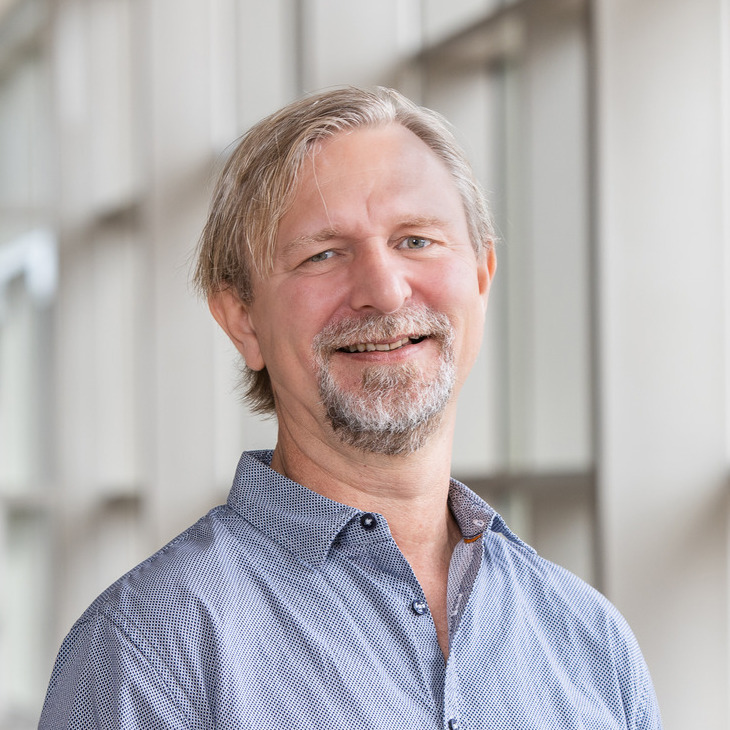
Kenneth Roberts, Ph.D., professor of chemistry and biochemistry in Oxley College of Health & Natural Sciences, Parameswar Harikumar, Ph.D., professor of physics and engineering physics in the College of Engineering & Computer Science, and Gilcrease Chief Conservator Jacinta Noble are combining their expertise to examine a collection of 16th-century Mesoamerican Tribute Records from New Spain, modern-day Mexico. Their work has also expanded internationally through collaboration with a doctoral researcher from the University of Calabria in Italy.

Together, the researchers are using Raman microscopy and other spectroscopic techniques to uncover the history, materials and cultural significance contained within these centuries-old manuscripts.
For ECS Dean Andreas A. Polycarpou, the project illustrates the broader value of bringing together researchers with different expertise and perspectives.
“Some of the most interesting research questions do not belong to a single discipline, and neither do their solutions,” he said. “This collaboration demonstrates what becomes possible when faculty in physics, engineering and chemistry work alongside experts in conservation, the humanities and international partners. Dr. Harikumar and his colleagues are applying fundamental science and advanced technology to help us understand and preserve human history. That is a powerful example of the broader impact of engineering and science, and exactly the kind of collaborative research culture we want to foster at UTulsa.”
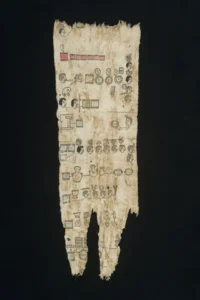
The tribute records at the center of the research were painted around the mid-16th century on long strips, known as tiras, or amatl, a sophisticated fig-bark material produced by Indigenous papermakers.
Created by Indigenous painter-scribes from towns in Mexico, the records served an important historical purpose. Art history experts have determined that Indigenous communities used these documents as legal evidence to report abuse, challenge excessive tribute demands and negotiate reductions in tributes under the Aztec Empire, which ruled central Mexico from 1428 to 1521, and later under Spanish colonial rule following the conquest of 1521.
Today, the UTulsa-Gilcrease research team is asking a different but complementary question: Are the colorants in the Gilcrease tribute records consistent with materials known to have been used in manuscripts of this kind during this period?
Answering that question requires expertise that crosses traditional academic boundaries.
Roberts explained that investigating the chemistry of the materials offers another window into the remarkable knowledge possessed by the people who created the manuscripts.
“Through studying these tribute records it became apparent that the Indigenous tribes of the Mexico Basin possessed a high level of chemistry knowledge about pigment sourcing, extraction, purification and binding agents that would make the tribute records last for hundreds of years,” Roberts said.
An international research partnership
The project’s collaborative reach extends well beyond Tulsa.

Over the summer, Roberts and Noble worked with Irene Barba Castagnaro, a doctoral student from the University of Calabria in Italy. The connection between the University of Calabria and UTulsa dates to 2003, and research collaborations between the two institutions have continued over time.
Castagnaro’s research focuses on the study and characterization of cultural heritage materials. She specializes in Raman spectroscopy, which enables researchers to help identify substances in a cultural artifact through their distinctive vibrational responses.
“Every object is the result of choices, resources and knowledge belonging to a specific historical moment,” Castagnaro said. “Studying these records therefore means preserving not only the object itself but also the knowledge and information it carries. This is particularly important when dealing with records from Indigenous populations, because it helps keep a part of their history and heritage alive and accessible.”
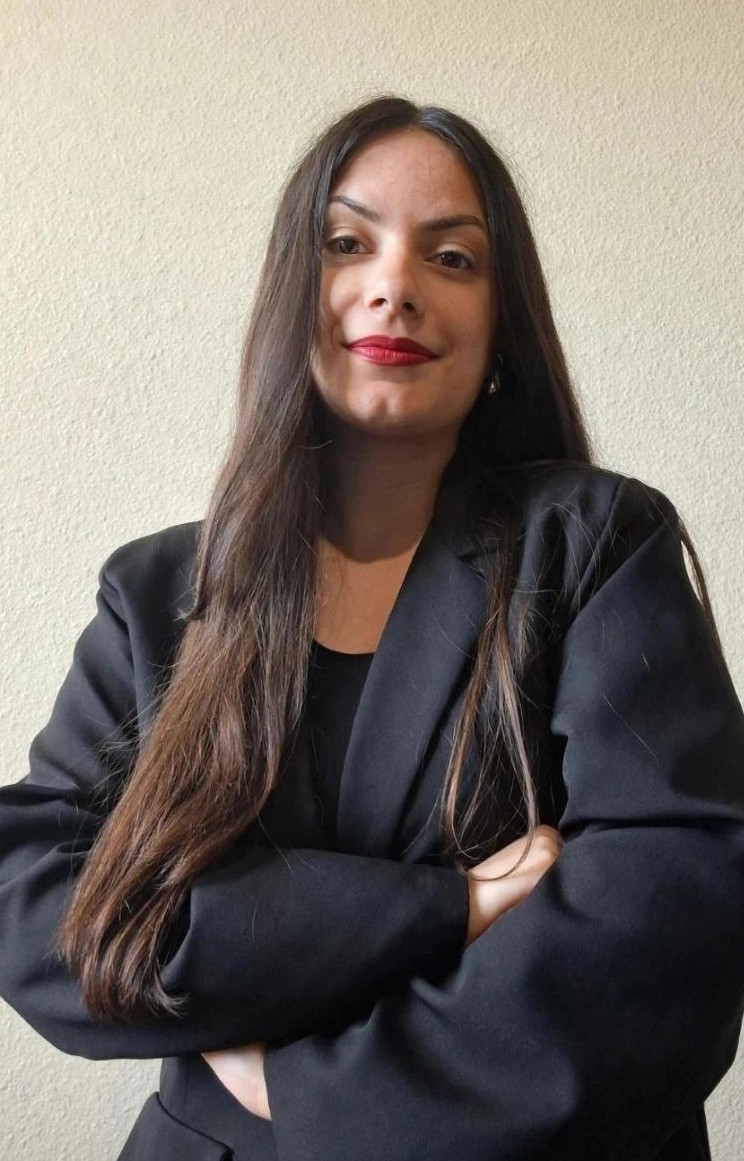
Her work in Tulsa highlights another important dimension of the project: collaboration brings not only different academic disciplines together, but also researchers from different institutions and countries around a shared question.
Even for scientists accustomed to studying ancient materials, it can be remarkable that pigment surviving for more than four centuries can still retain information about how it was produced.
“The main colors in the pictographs are black, red and blue,” Roberts explained. “We used Raman microscopy to identify the types of pigments used in the pictographs. We determined the black pigment was carbon black from charcoal. The red pigment was determined to be cochineal from the female Dactylopius coccus insect, which lives on prickly pear cacti. We are currently studying the blue pigments to determine their origin.
“In addition, we are using spectroscopic methods to determine at what temperature the carbon black was formed. We are interested to see what level of repeatability and quality control was used by the Indigenous peoples.”
Physics, engineering and chemistry meet cultural preservation
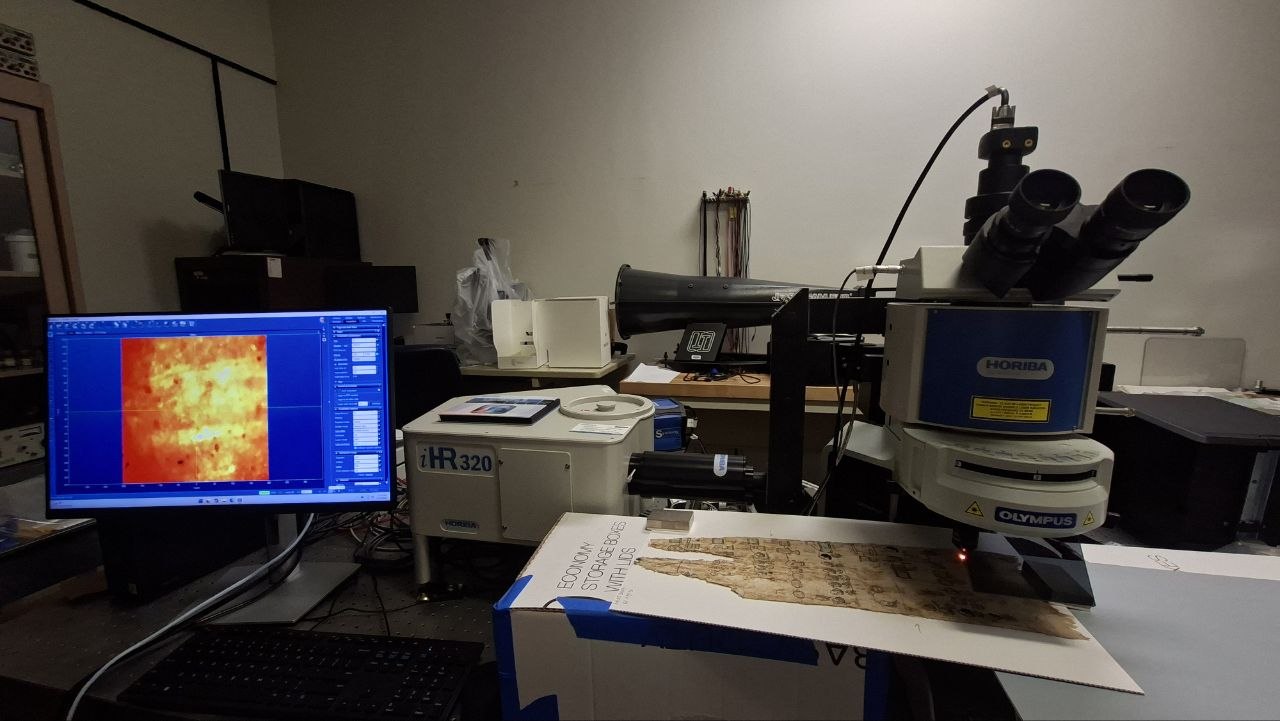
A key advantage of Raman microscopy is its ability to provide highly detailed information while protecting the artifacts being studied. Researchers can use the technique to identify pigments and binders, investigate production techniques and assess deterioration while preserving the integrity of the original works.
This is where Harikumar’s expertise and the capabilities of his college play an important role in the collaboration.
“Raman microscopy and spectroscopy are among the most powerful non-destructive analytical techniques available for studying ancient artworks,” he said. “They enable us to gather detailed chemical information without removing significant material from the paintings.”
Researchers analyze individual pigment particles only a few micrometers in size. When laser light strikes the particles, most of the light is scattered. A small fraction, however, exchanges energy with molecular vibrations within the material. The resulting Raman spectrum acts like a molecular fingerprint, helping researchers identify the compounds present in the pigment.
But obtaining the measurement is only part of the challenge. Understanding what the measurement means requires another discipline.
“Physics provides the measurement principles and instrumentation, while chemistry allows us to identify and interpret the materials we discover,” Harikumar explained.
That interdependence is at the heart of the project. Physics and engineering make sophisticated measurements possible; chemistry helps identify and understand the materials; conservation expertise ensures that fragile, irreplaceable artifacts can be studied safely; and historical and cultural knowledge helps place the scientific findings into context.
Together, the disciplines can tell a more complete story than any one of them could tell independently.
Noble saw that collaboration firsthand as the team worked to reconcile the requirements of scientific analysis with the responsibility of protecting the manuscripts.
“This was an exciting opportunity to see how the colorants used on these manuscripts might be characterized with Raman spectroscopy,” Noble explained. “Dr. Roberts and Irene Castagnaro were patient and thoughtful collaborators. The collection items required careful handling during analysis, and they were very understanding and helpful as we constructed set-ups around the microscope stage to keep the manuscripts safe.”
Collaboration creates opportunities for students
The research also points toward future opportunities for UTulsa students.
Roberts said the team is looking forward to an equipment upgrade: a new Raman microscope that will allow researchers to investigate additional shades in the pictographs, including a blue pigment that has so far produced inconclusive results.
As the project develops, students will have opportunities to participate in research that crosses the traditional boundaries among science, engineering, conservation and the humanities.
“Collaborative research not only produces better scholarship, it creates exceptional learning opportunities for our students,” Polycarpou said. “Students begin to understand that the tools of physics, engineering and computer science can have impact in places they might never have imagined, including art, archaeology and cultural preservation. Learning how to work with people who approach a problem differently is itself an essential part of preparing our students to address the complex challenges they will encounter throughout their careers.”
The research demonstrates that centuries-old manuscripts can be more than objects to preserve and admire. Through collaboration, they can become scientific time capsules, retaining information about the materials, techniques and knowledge of the people who created them.
And by bringing together scientists, engineers, conservators, historians, students and international collaborators, UTulsa researchers are demonstrating that sometimes the most revealing discoveries occur not within the boundaries of a discipline, but where disciplines meet.
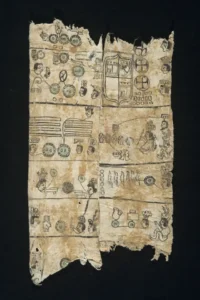
To learn more about the tribute records, visit Gilcrease’s Colonial Latin American Special Collections online. The collections contain manuscripts, rare books and maps documenting the history of New Spain and its northern provinces in the Americas from 1494 to 1857.