


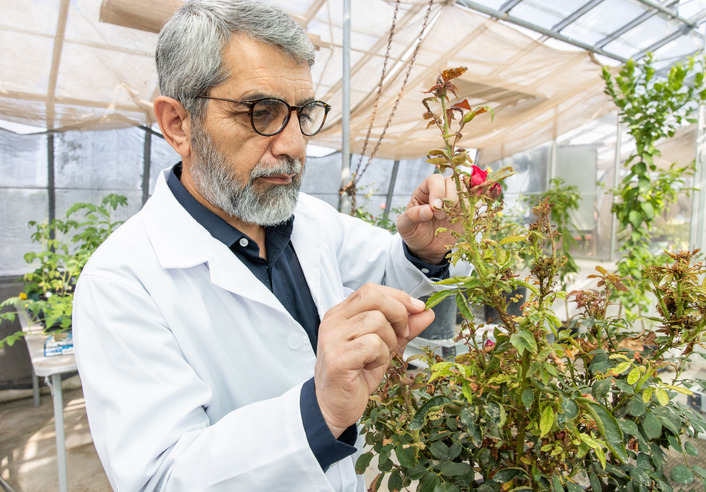
In the wake of the COVID-19 global pandemic, the public’s interest in the nature and impact of viruses on human health has skyrocketed. Less well known are the viruses – both destructive and potentially helpful – affecting plants.
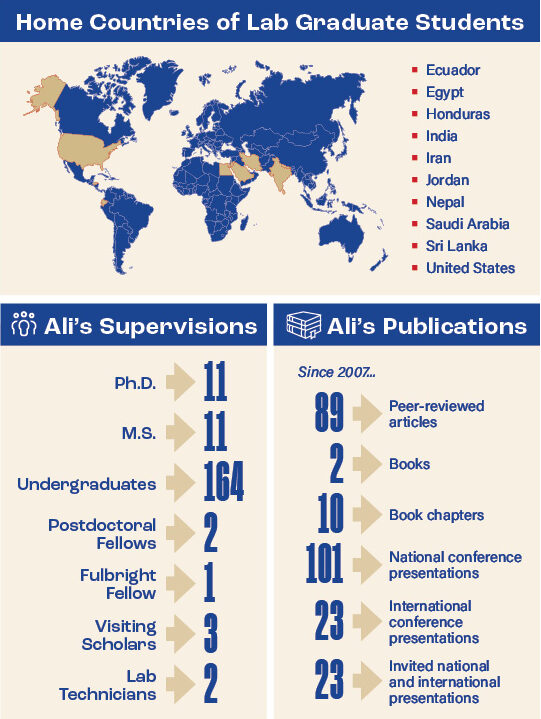
Since joining The University of Tulsa in 2007, Professor of Biological Science Akhtar Ali has spearheaded research on harmful plant viruses as well as other viruses that could act as defenders. A groundbreaking virologist, Ali’s investigations have resulted in extensive publications, including more than 130 peer-reviewed papers and two books. He serves as senior editor for the journals Plant Disease and PhytoFrontiers, academic editor for PLOS ONE and associate editor for Frontiers in Virology. He has also guest-edited special issues of Viruses and Pathogens.
Ali carries out his research in the Akhtar Virology Lab, a state-of-the-art facility that enables scientific investigation and developmental opportunities for students and visiting scholars.
Combatting crop diseases
Work in Ali’s lab focuses on viruses affecting key food crops, such as cotton, cucurbits, peppers, tomatoes, soybeans and strawberries. “Harmful plant viruses cause major diseases in these plants, thereby reducing yields and risking food security,” Ali explained. “Focusing largely on these crops as they are grown in Oklahoma and neighboring states, our main goals are to identify emerging viral diseases and develop effective control strategies.”
Ali said plant diseases are responsible for up to 40% of global crop losses. The result is economic damage exceeding $220 billion annually. The U.S. Department of Agriculture reports that non-native plant pathogens exert a toll of $21 billion each year.
“To ensure food security both at home and around the world, we need the kind of research my students and I are carrying out at UTulsa,” Ali remarked. “It’s essential to develop effective management strategies as well as discover ways to eradicate these pathogens from the soil.”
Rescuing roses from a lethal disease
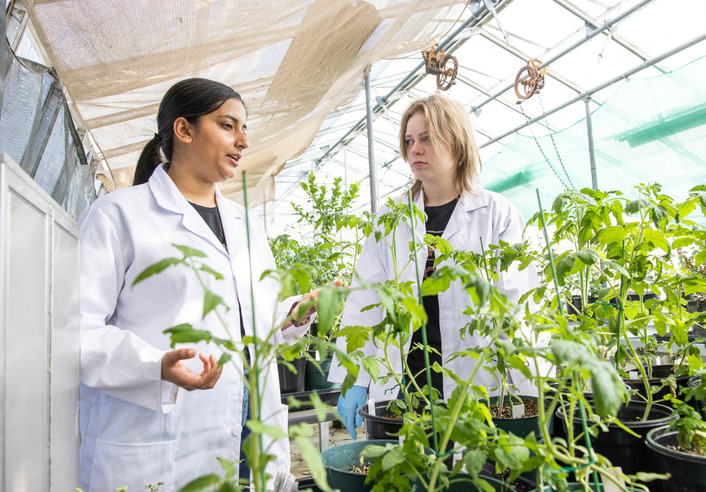
Beyond food, Ali and several students under his supervision are exploring ways to combat the rose rosette virus (RRV). This highly invasive pathogen, which not long ago decimated the Tulsa Rose Garden, causes abnormal growth of plant tissue, including witches’ broom, excessive thorns, enlarged canes, and malformed leaves and flowers. RRV is estimated to cost tens of millions of dollars in losses each year for the U.S. rose and ornamental flower industry.
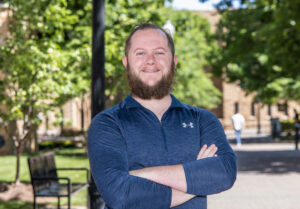
Ali is the co-principal investigator on the multistate Developing Sustainable Landscape Roses project funded by a grant from the National Institute of Food and Agriculture aimed at addressing this problem. In the lab, biological science doctoral student and senior lab member Caleb Paslay (M.S. ’23) is leading work on the UTulsa side of the RRV investigation. “Its main objectives,” he explained, “are to explore host resistance to the virus, examine the genetic diversity of the RRV population and assess RRV’s physical movement throughout the plant vasculature.
The surprising benefits of mycoviruses
Not all plant viruses are necessarily destructive. A second arm of Ali’s work entails exploring mycoviruses, which are viruses that infect fungi. Ali and other scientists believe mycoviruses could act as biological control agents against fungal pathogens.
To understand this potential, members of the Akhtar Virology Lab are isolating mycoviruses from fungi to study their effects on fungal growth and virulence. “We are particularly interested in their application for managing major fungal diseases such as Fusarium wilt in watermelons and cotton, and charcoal rot in soybeans,” Ali noted.
His investigations in this area took a major step forward in 2017 as a result of a U.S. Fulbright Fellowship, which enabled him to conduct research on mycoviruses in Nobuhiro Suzuki’s lab at the University of Okayama in Japan. In 2024, Ali was awarded a British Society for Plant Pathology Fellowship to conduct further mycovirus research in the lab of Ioly Kotta-Loizou at Imperial College London. Ali and Kotta-Loizou have continued to collaborate and plan a major grant application to the National Science Foundation.
 Student-centered lab training
Over its 18 years, the Akhtar Virology Lab has given students at all stages of their education the opportunity to engage in meaningful scientific research. Since joining the lab in June 2022, for example, pre-med biological science major Vishwesh Dayal has primarily studied pepper viruses. Among his many contributions have been collecting samples from fields, developing primers, extracting RNA and DNA, screening for an assay of viruses and observing variations in symptoms across species.
In their scientific work, Paslay said he and his fellow researchers typically divide their efforts into three categories: biological characterization, molecular characterization and computational analyses. “Not unlike the human genome project, the techniques we employ – including culturing viruses and visualizing them with electron microscopy – are geared toward eventually obtaining the genome (or portions of it),” he said. “Ultimately, these efforts will support a better understanding of virus biology, diversity and evolution.” Already, these efforts are producing fruit. Earlier this year, Paslay, Dayal and Ali co-authored a peer-reviewed paper on reporting, detection and phylogenetic analysis of bell pepper endornavirus isolates infecting pepper plants in Oklahoma.
Many members of Ali’s lab have gone on to meaningful careers following graduation. Dulanjani Wijayasekara (Ph.D. ’21), for instance, is an assistant professor of biology at Northeastern State University. During her doctoral studies, she focused on understanding the evolution and molecular characterization of Maize dwarf mosaic virus in its domesticated and natural hosts. Wijayasekara credits the lab as giving her hands-on expertise in Illumina Nextera next-generation sequencing, viral genome assembly, annotation and evolutionary analysis.
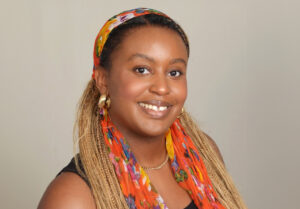
Recent graduate Samira Mokhtari (Ph.D. ’23) is now an assistant professor of microbiology at Cameron University: “Under Dr. Ali’s mentorship, I learned how to truly think like a scientist, ask the right questions, seek out answers and follow my curiosity wherever it led. Along the way, I gained extensive training in molecular virology, mycology, microscopy, data analysis and experimental molecular techniques.”
A social laboratory
A successful college lab is more than a place to conduct research. To be truly effective, it must be a welcoming, supportive environment that fosters collegiality and the open exchange of ideas.
“Beyond technical training,” Wijayasekara commented, “I benefited immensely from Dr. Ali’s supportive mentorship. My time in his lab strengthened essential soft skills that have proven instrumental in my career, such as teamwork, communication, critical thinking, public speaking and organization.”
For Paslay, one of the lab’s most enjoyable aspects is its supportive and constructive atmosphere. “We all come from diverse backgrounds, and we all strive to make each other better,” he said. “We relay ideas back and forth, share challenging tasks, exchange newly published articles and discuss their implications.”
Dayal echoes these sentiments: “The lab’s atmosphere is focused on growth and learning. At the same time, everyone is good friends with each other and there’s often a lot of laughter while we are performing experiments. The bottom line is we’re all committed to helping each other untangle problems and develop solutions.”
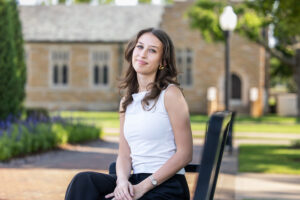
One of the highlights thus far for Dayal was when he and several others attended the 33rd Annual Nebraska Center for Virology Retreat during spring break 2025: “It was a fantastic experience bonding with each other. Another student, Jennifer Vo, and I won awards for Best Undergraduate Posters,” which included a $200 prize for each of them. “I am so grateful to Dr. Ali for his encouragement and for the Akhtar Virology Lab as a place where I can flourish as a person, a student and a scientist.”