
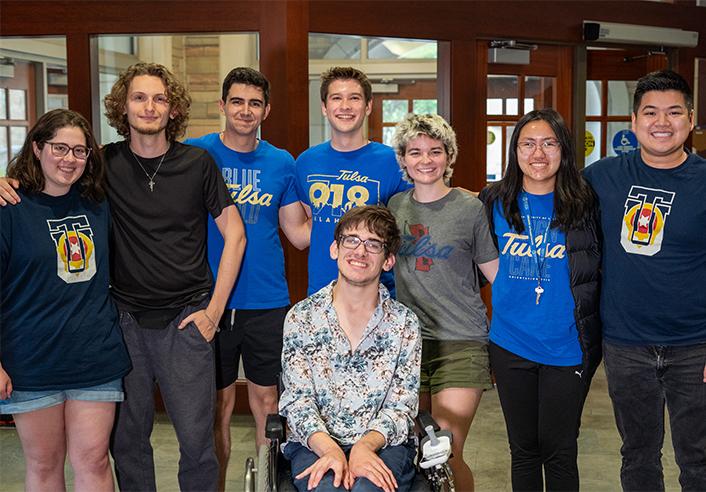
Since the 1970s, mechanical engineering students at The University of Tulsa have focused their talents on projects that address the special needs of people with physical and developmental disabilities. Today, the program is known as the Make a Difference Engineering (MADE at TU) initiative, and it’s one of the most popular student organizations in the College of Engineering & Computer Science.
This year, a team of computer science students have taken on a unique MADE project that uses the power of artificial intelligence to help a fellow UTulsa student, William Baker, who has spastic quadriplegia cerebral palsy and vocal dysarthria.
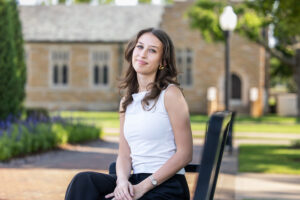
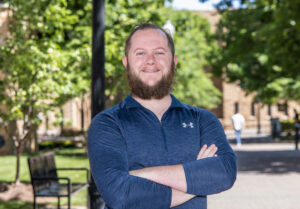
The project is called ClearSay, and Ty DeVito, a computer science sophomore from Sycamore, Illinois, is the project lead.
“William has limited use of his hands and legs, and it can make things like typing and writing more difficult,” DeVito explained. “Additionally, he has a bit of a vocal irregularity so it can be difficult for technology, like Siri or speech-to-text, to understand him. Our project focuses on making a speech-to-text service that is able to understand his unique voice and transcribe it so he can complete assignments and do his work better.”
Baker is a first-year engineering student at UTulsa. His mother reached out to Mechanical Engineering Chair John Henshaw in 2024, after learning about the MADE program and shared information about her son’s limited ability to write and type. Henshaw was aware of DeVito’s interest in AI and speech-to-text technology, so he connected the two students. They started meeting regularly to record training data to create a customized speech model for Baker.
During the fall 2025 semester, DeVito assembled a team of students and ClearSay officially became a MADE project. This spring, they were able to share the first beta version of their iOS app with Baker so he could begin using ClearSay on his phone.
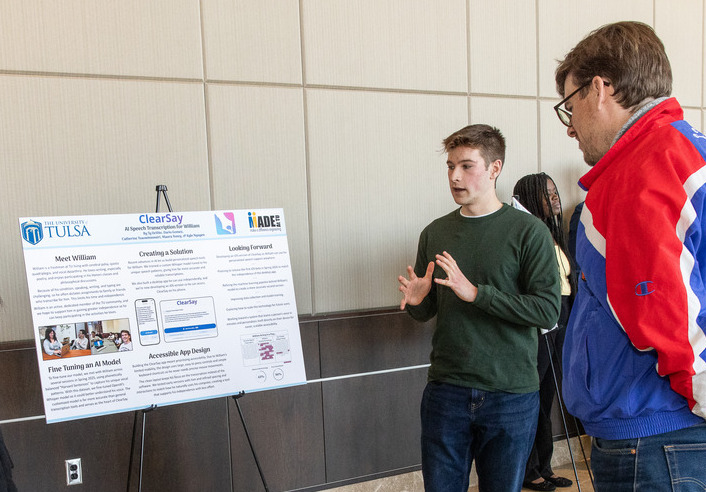
From designing to coding, DeVito explained that the team has worked together to overcome technical issues and roadblocks, which enhanced their experience as computer science students because they’re able to see a real-world positive impact on one of their peers. He pointed out that skills he picked up in UTulsa’s Fundamentals of AI course have been particularly helpful in developing this technology.
“Opportunities like this really give us a chance to use the skills that we’ve been developing to create something that can do good for people,” DeVito said. “It can be discouraging when you’re working in class, you complete projects and homework assignments, but you can kind of lose sight of what the skills we’re developing are for. So being able to apply that to projects like this, where we can see the results and help people in need, is just really special. It’s very inspiring.”
Baker noted he is already using the technology to assist with his schoolwork.
“ClearSay has enabled me to complete essay assignments on my own, which means that I can navigate college completely independently,” Baker said. “It has been an essential tool my first year here at UTulsa.”
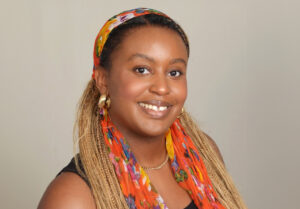
Sahara Smith, a computer science and business sophomore from Springfield, Missouri, explained that she’s proud to be a part of the ClearSay team because it proves that technology and AI can be used for good, making the world more accessible for those in need. She said she didn’t expect to work on such a large project with real-world implications this early in her college career.
“We have so many wonderful mentors and professors who have helped on this project,” Smith said. “And being able to learn from each other as well has been really awesome, because we each bring in a different skill set and different strengths and weaknesses.”
Their goal is to expand the ClearSay platform into a suite of apps that include different speech models to aid more people.
“We need to make sure this is as accessible as possible and can work for people with a wide range of vocal situations and limb differences,” DeVito said.
The students said they’re grateful for the MADE program and for the guidance of Henshaw, who is the faculty adviser for the student organization and serves as the Harry H. Rogers Endowed Chair in Mechanical Engineering.
He said the ClearSay project is meaningful to him for several reasons.
“The students have done super-creative and smart work and shown awesome dedication to the project,” he explained. “But what means the most to me is what the project has done for William, in terms of giving a bright and promising young engineering student the freedom to communicate in ways that he wasn’t able to before this project.
The MADE at TU student organization is open to all students, regardless of their major.