

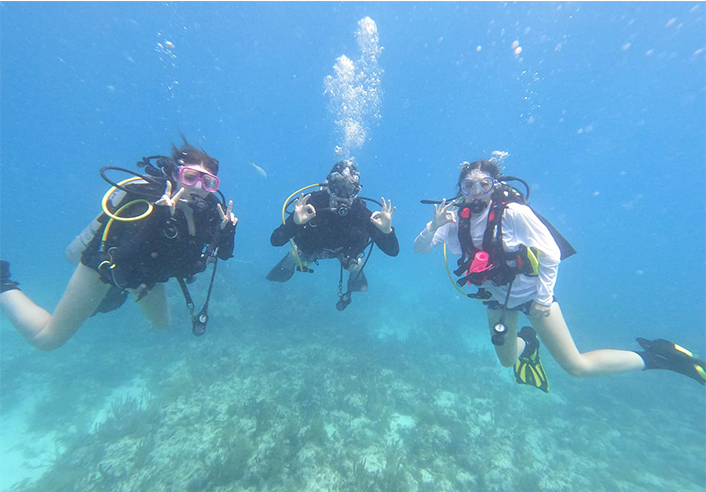
While most college science courses take place in classrooms and laboratories, students in The University of Tulsa’s marine biology travel course spent a week exploring coral reefs, mangrove forests and seagrass beds in Florida.
Led by Katelyn Mika, assistant professor of biological science, and accompanied by Ron Walker, dean of the Oxley College of Health & Natural Sciences, the course at MarineLab in Key Largo introduced students to multiple marine habitats. Through lectures, laboratory exercises and time spent in the water, undergraduates explored the organisms and ecosystems that make the Florida Keys one of the most biologically diverse regions in the United States.
“The marine biology course is intended to introduce students to the many incredible habitats that exist underwater and the flora and fauna that live there,” Mika said.
Hands-on research
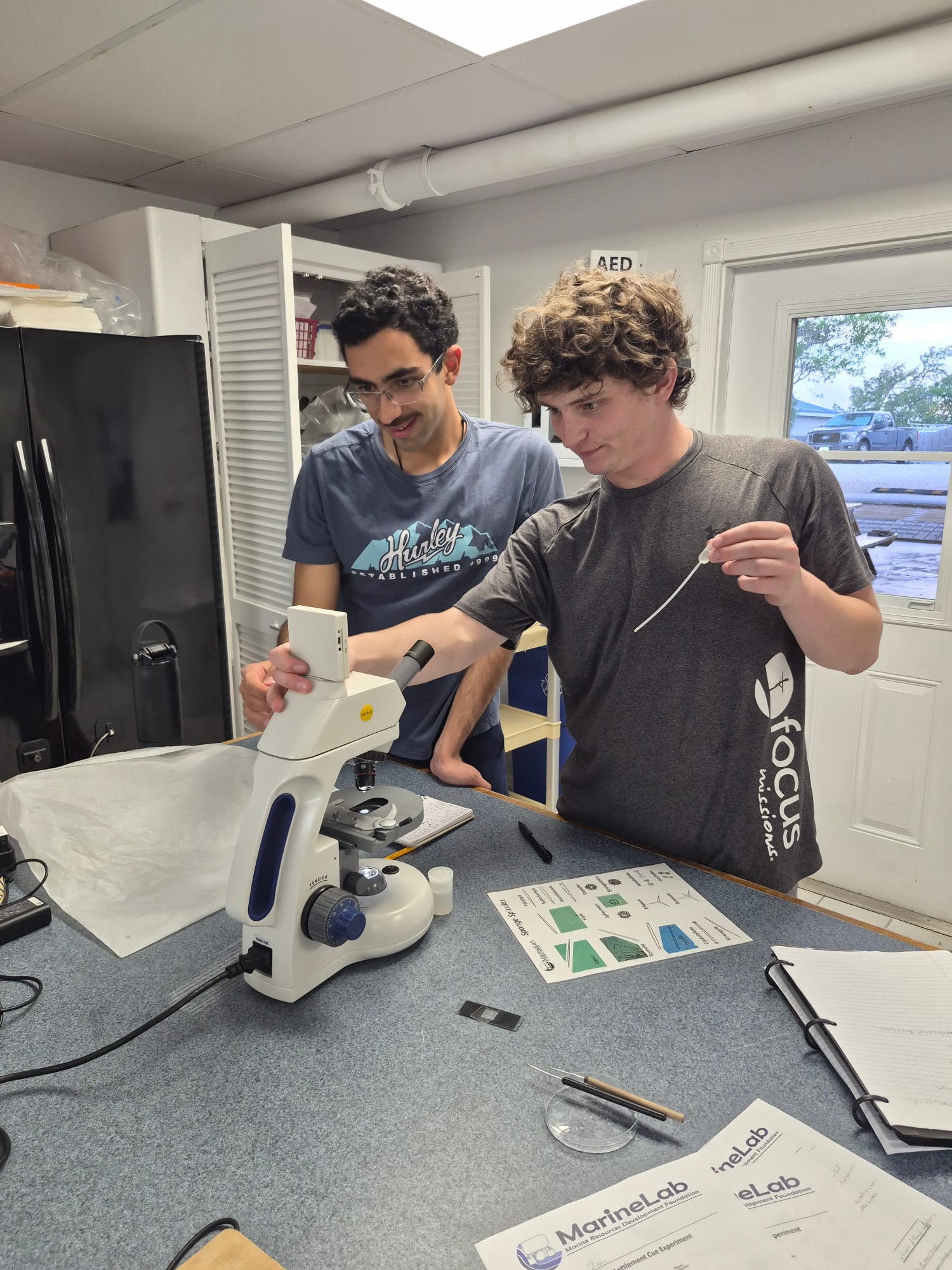
Throughout the week, students participated in a variety of activities designed to mirror the work of marine scientists. On the first evening, they designed an experiment examining environmental factors that influence the growth of the Cassiopeia jellyfish and monitored their results throughout the course. Additional activities included water quality monitoring and invertebrate behavior experiments.
Students conducted fieldwork within the habitats they were studying. In seagrass beds, they learned how researchers monitor ecosystem health by estimating species composition and coverage within survey squares. In mangroves, students collected sediment cores and compared water quality measurements from different locations.
One of the course’s most memorable activities involved examining algae collected from a seagrass habitat. Students carefully searched through the algae and discovered a variety of living organisms within it: brittle stars, mantis shrimps, crabs, snails and worms. After identifying and counting their findings, students calculated a diversity index to better understand the health and complexity of the ecosystem.
Students also learned about conservation efforts taking place in the Florida Keys. During a coral restoration workshop, they prepared coral fragments that will be used in ongoing restoration projects.
Diving into new skills
To conduct much of this underwater research, students developed their diving capabilities. Students who were not already scuba certified had the opportunity to earn their certification as part of the course, while experienced divers furthered their underwater skills.
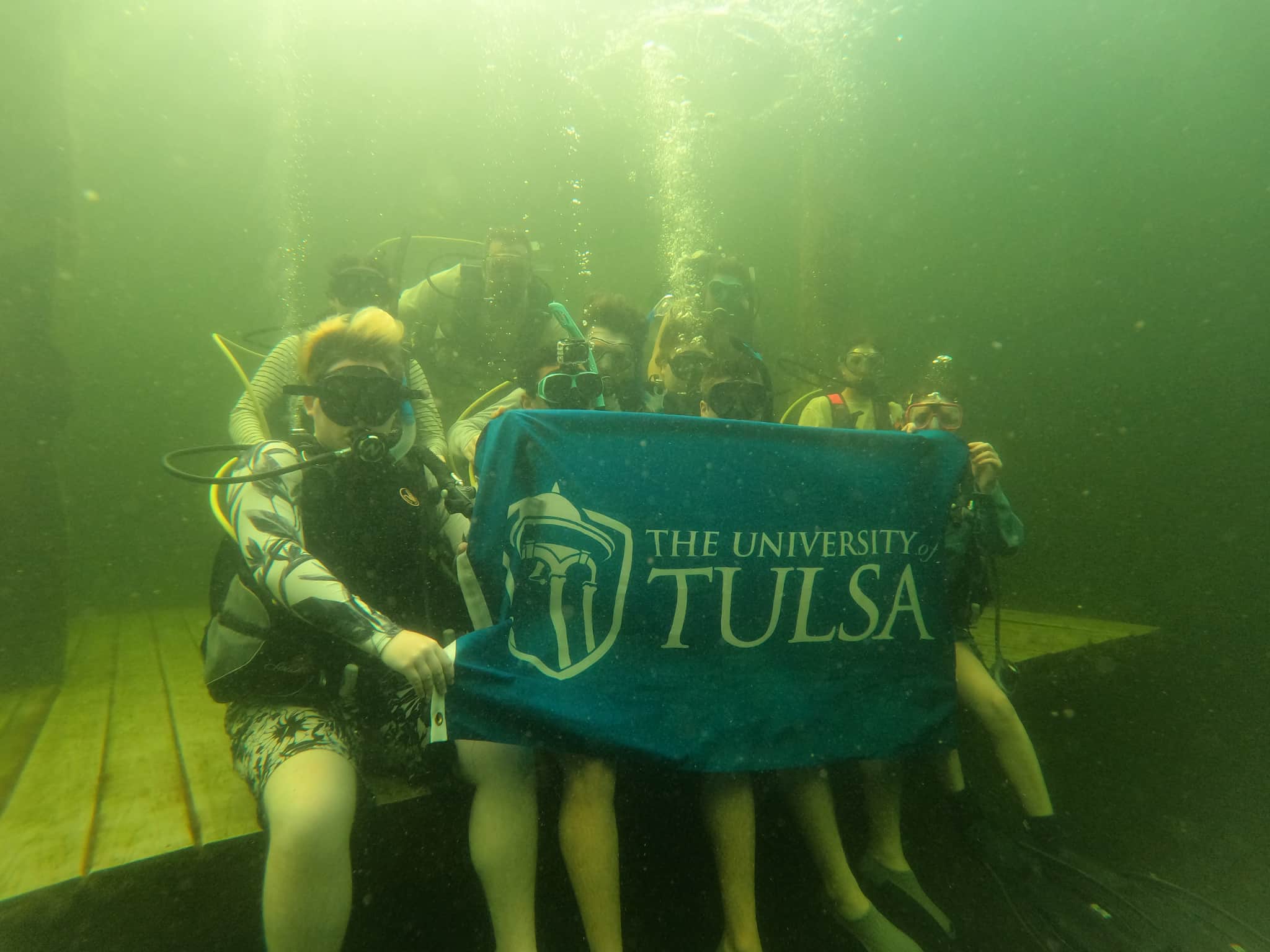
“My favorite moment from the trip was getting to do my first scuba dive on a coral reef,” said biology junior Andrew Kolozsvary of Plymouth, Michigan. “It was so rewarding to get to apply my learning from my scuba training and our fish identification class in real time. I was proud of myself for learning something new that was slightly outside of my comfort zone.”
For Charlotte Vanderyt, a pre-med junior from Tulsa who also works in Mika’s research lab, the hands-on fieldwork deepened concepts she had previously only encountered in lectures.
“We got to snorkel out to a seagrass plain and carry out the standard measures of ecosystem health,” Vanderyt said. “Knowing why those measures are important to the health of a seagrass ecosystem is valuable, but knowing how to obtain those measurements is a whole other world of knowledge I am eternally lucky to have experienced.”
She added that the trip changed how she thinks about marine ecosystems and conservation. “Spending so much time in a landlocked state, you forget what a profound and deeply important ecosystem the ocean is. Being around those who care taught me that my own love and passion for the environment are the first step toward conservation and the key to starting a larger movement.”
Vanderyt noted that the course perfectly complements her undergraduate research. “The course taught me how to act like a scientist, while the lab has taught me how to think like one,” she said.
This blending of theory and practice is just one example of the real-world opportunities available to students. “Experiential learning is central to how we prepare students in the Oxley College of Health & Natural Sciences,” Walker said. “This course gave students the opportunity to apply what they learned in the classroom while working alongside faculty in one of the world’s most unique marine environments. Those kinds of experiences build both scientific skills and lasting confidence.”
Building community
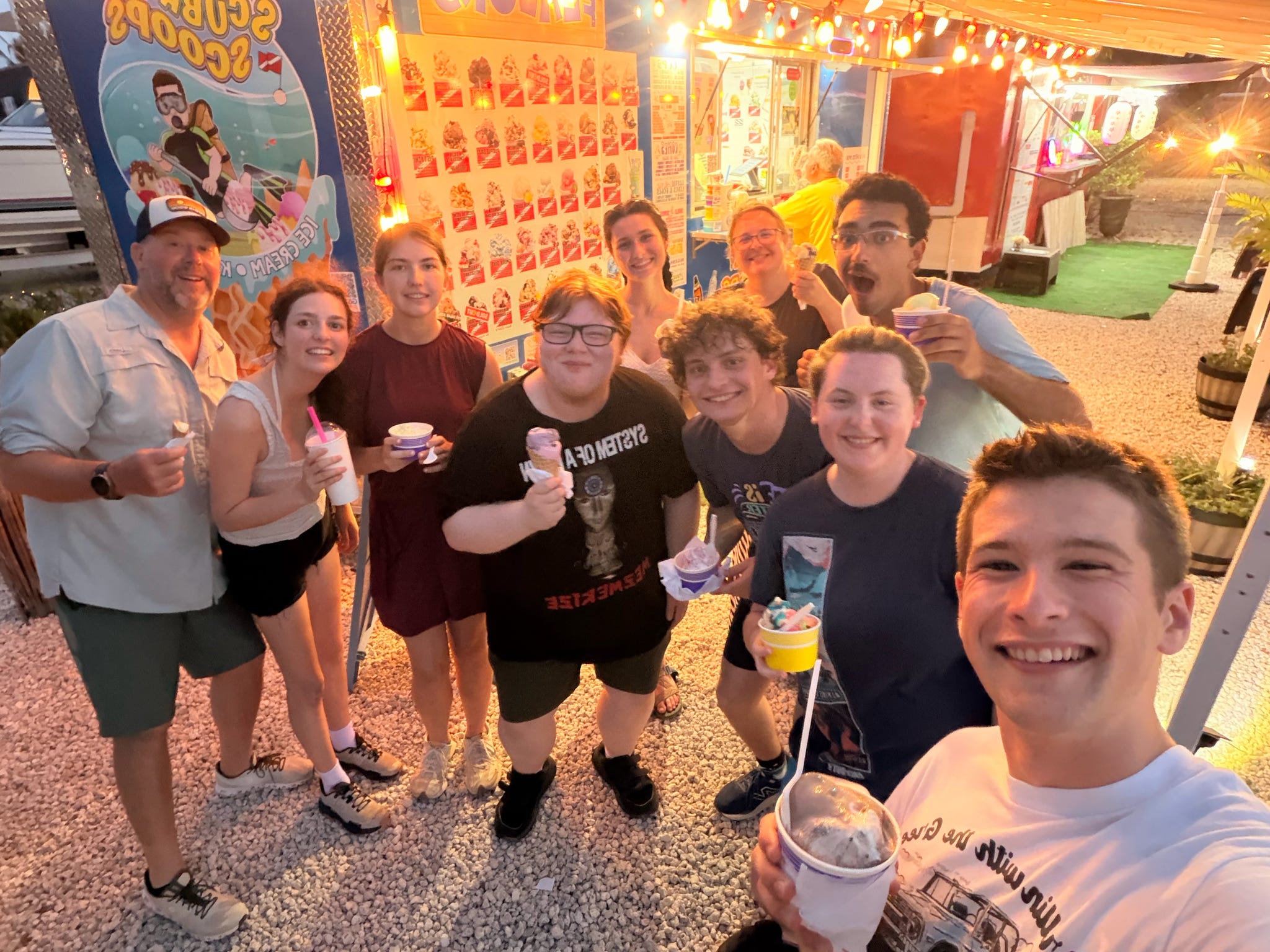
Outside of scheduled coursework, students participated in daily traditions that included breakfast discussion questions, sunset photos and visits to a local ice cream shop. For Mika, one of the highlights came after students completed their first ocean dive.
“Listening to them talk about what they experienced together for the first time and hearing them excitedly identify the organisms they saw is an incredible experience,” she said.
UTulsa offers several options for students to expand their learning through the Center for Global Engagement.