

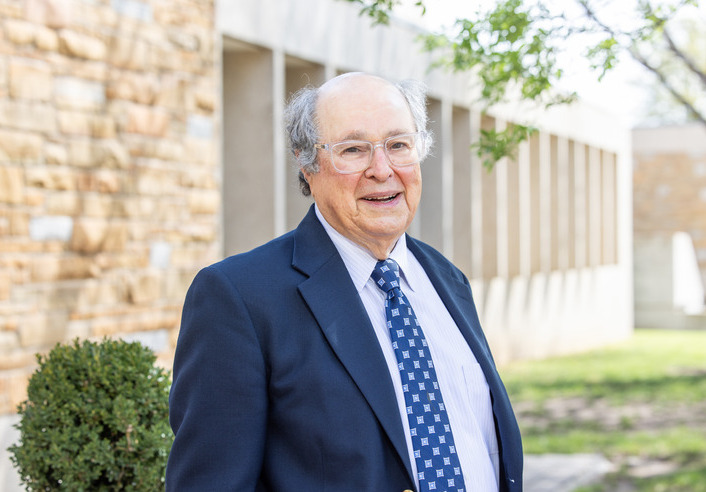
For Professor Emeritus Martin A. Frey, returning to the classroom at The University of Tulsa College of Law this spring was about something simple: finishing what he started.
After decades teaching at UTulsa Law and several years of retirement that included writing, volunteering and legal service, Frey decided he wanted one more semester with students.
“I never really felt when I retired that I had closure,” he said. “I wanted to see if I could put some of the ideas I’ve been thinking about into practice.”
Now 87, Frey is teaching Contracts to a small group of 17 students. The class has become something of a capstone, not only for his career but for the teaching philosophy he developed across nearly five decades of legal education.
A career built around students
Frey joined the UTulsa Law faculty in 1976 after teaching at Texas Tech University. What he expected to be a short stay turned into a career spanning generations of students.
During his time in Tulsa, Frey taught foundational and upper-level courses and served as associate dean from 1981 to 1984.
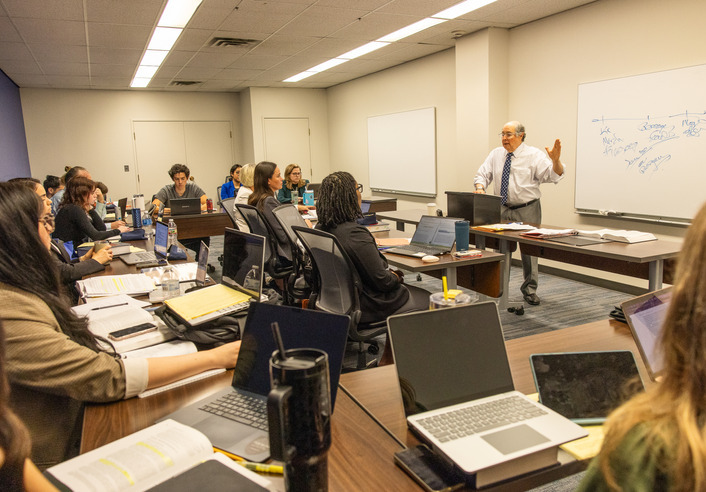
Students repeatedly recognized his work in the classroom, naming him Outstanding Professor of the Year multiple times and awarding him honors as both Outstanding First-Year Professor and Outstanding Upper-Class Professor.
In 1981, Frey received The University of Tulsa’s campus-wide Outstanding Teacher Award. Upon his retirement in 2001, the UTulsa Law Alumni Association honored him with a Lifetime Service Award.
Bringing practice into the classroom
Even in his final semester, Frey’s teaching reflects decades of real-world experience.
He served for years as a senior adjunct settlement judge for the U.S. District Court, helping parties resolve complex disputes. Later, he volunteered with the Tulsa Police Department’s Financial Crimes Unit, assisting investigators with embezzlement and fraud cases.
Those experiences continue to shape how he approaches the classroom.
Rather than focusing only on appellate opinions, Frey emphasizes the investigative and analytical work that happens long before a case reaches a courtroom.
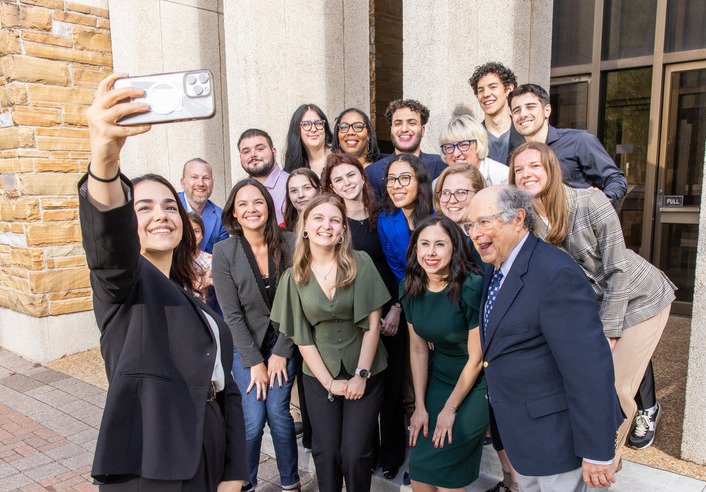
“We’re studying appellate cases,” he said, “but a lot of what happens in those cases starts much earlier – in the lawyer’s office, during the interview, during the investigation.”
The legacy of a teacher
When Frey reflects on his career, he points first to the students. Across decades of teaching, many former students have stayed in touch long after graduation.
“Sometimes you don’t even remember the student,” he said. “But something you did helped them, and that changed their life. And because it changed their life, it changed their kids’ lives.”
For Frey, that ripple effect is what makes teaching worthwhile.
This semester, he said his focus is simple: helping his students build the analytical thinking, writing skills and work ethic the profession demands.
“I have 17 students,” he said. “And they’re hungry.”
For a professor who has spent a lifetime in the classroom, that’s reason enough to return one more time.