




For the second consecutive year, The University of Tulsa convened leading voices from academia, industry and national laboratories as host of a National Academy of Engineering Member-Led Event, reinforcing the growing national role of both UTulsa and Oklahoma in energy innovation and subsurface engineering.
The 2026 program, “Energy and Subsurface Engineering: Challenges, Technologies and Future Directions,” advanced the momentum of UTulsa’s 2025 event on carbon capture and sequestration and continued a multiyear effort to shape the future of energy systems through sustained national dialogue. These gatherings position UTulsa as a trusted platform for high-level technical exchange and strategic insight.
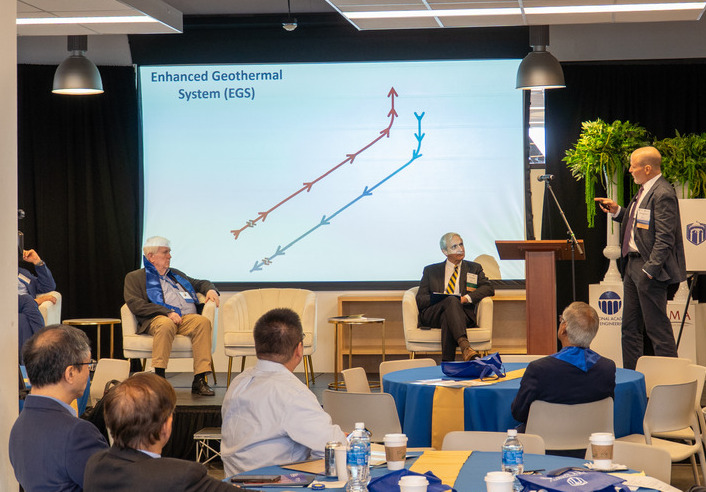
Organized by the College of Engineering & Computer Science in partnership with the NAE, the two-day event featured thematic sessions, expert panels and collaborative discussions on the evolving role of subsurface systems in energy production, storage and sustainability. Participants from leading universities, major energy companies and national laboratories examined emerging technologies and unresolved challenges shaping the global energy landscape.
“Hosting NAE leadership for a second consecutive year reflects both recognition and responsibility,” said Andreas A. Polycarpou, James Sorem Inaugural Dean of the College of Engineering & Computer Science. “The complexity and scale of today’s energy challenges require integrated solutions across disciplines and sectors. UTulsa is committed to advancing research as well as convening the leaders and ideas that will define the future of energy systems.”
The event was chaired by NAE member James Brill, Jeffrey McDougall Eminent Professor of Petroleum Engineering, and included participation from multiple NAE members and internationally recognized experts.
Tours of UTulsa’s North Campus and research facilities gave participants direct exposure to the university’s applied research infrastructure and longstanding industry partnerships. These interactions reinforced UTulsa’s role as convener and demonstration site for innovation and translational research.
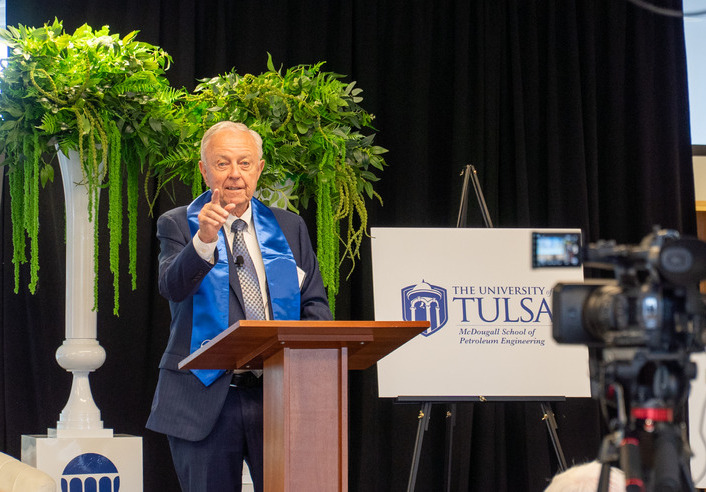
“Tulsa has long been where engineering expertise, industry leadership and entrepreneurial thinking intersect,” Brill said. “This convening highlights the role of our university and our state in advancing solutions that are critical to the nation’s energy future.”
This is mirrored in NAE President Tsu-Jae Liu’s remarks at the conference: “Tulsa and Oklahoma are uniquely positioned in this story. This region’s deep roots in energy engineering, combined with its growing strengths in materials, computation and sustainability, create powerful opportunities for innovation. The University of Tulsa exemplifies how tradition and transformation can coexist, honoring decades of expertise while pushing decisively toward the future.”
Williams CEO Chad Zamarin delivered the keynote address, offering a national perspective on infrastructure, demand growth and long-term energy resilience. Representing a company that handles roughly one-third of U.S. natural gas, Zamarin emphasized the importance of scalable infrastructure and adaptability in meeting rising energy demands from data centers, manufacturing and global markets. “The question is evolving from affordability alone to long-term reliability and scalability,” he said. His remarks underscored the importance of workforce agility, aligning with UTulsa’s focus on preparing students for a rapidly changing energy and technology landscape.
Technical sessions explored core domains of the energy transition and long-term sustainability, including:
- Enhanced geothermal systems and subsurface heat extraction
- Carbon capture and storage
- Multiphase flow and advanced reservoir characterization
- Nuclear waste storage and environmental security
Speakers from Chevron, Los Alamos National Laboratory and Texas A&M University highlighted technological progress and remaining challenges, reinforcing the central role of subsurface engineering in next-generation energy systems. Eight faculty members presented research spanning petroleum engineering, cybersecurity and advanced systems, while a poster session allowed students to engage directly with industry and academic leaders.
By hosting consecutive NAE Member-Led Events and building a multiyear platform around energy systems, UTulsa is strengthening its position as a national leader in convening, research and innovation. The university’s leadership extends beyond academic programs to facilitating the partnerships and insights required to address large-scale challenges in energy reliability, sustainability and security.
As Liu said: “The conversations you begin here can influence the direction of research, guide investment and help define how energy systems evolve in the decades ahead.”