
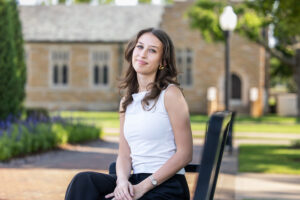
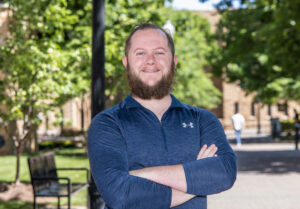
Reader’s Note: The World of Bob Dylan, co-hosted by The University of Tulsa’s Institute for Bob Dylan Studies and the Bob Dylan Center, saw more than 300 people come to Tulsa over the summer to celebrate the Nobel-winning singer-songwriter. Nursing student Aeric Beck attended the conference to help facilitate dialogue and panels hosted in Kendall College of Arts & Science’s Tyrrell Hall. We asked him to share his experience and reflections on the conference.
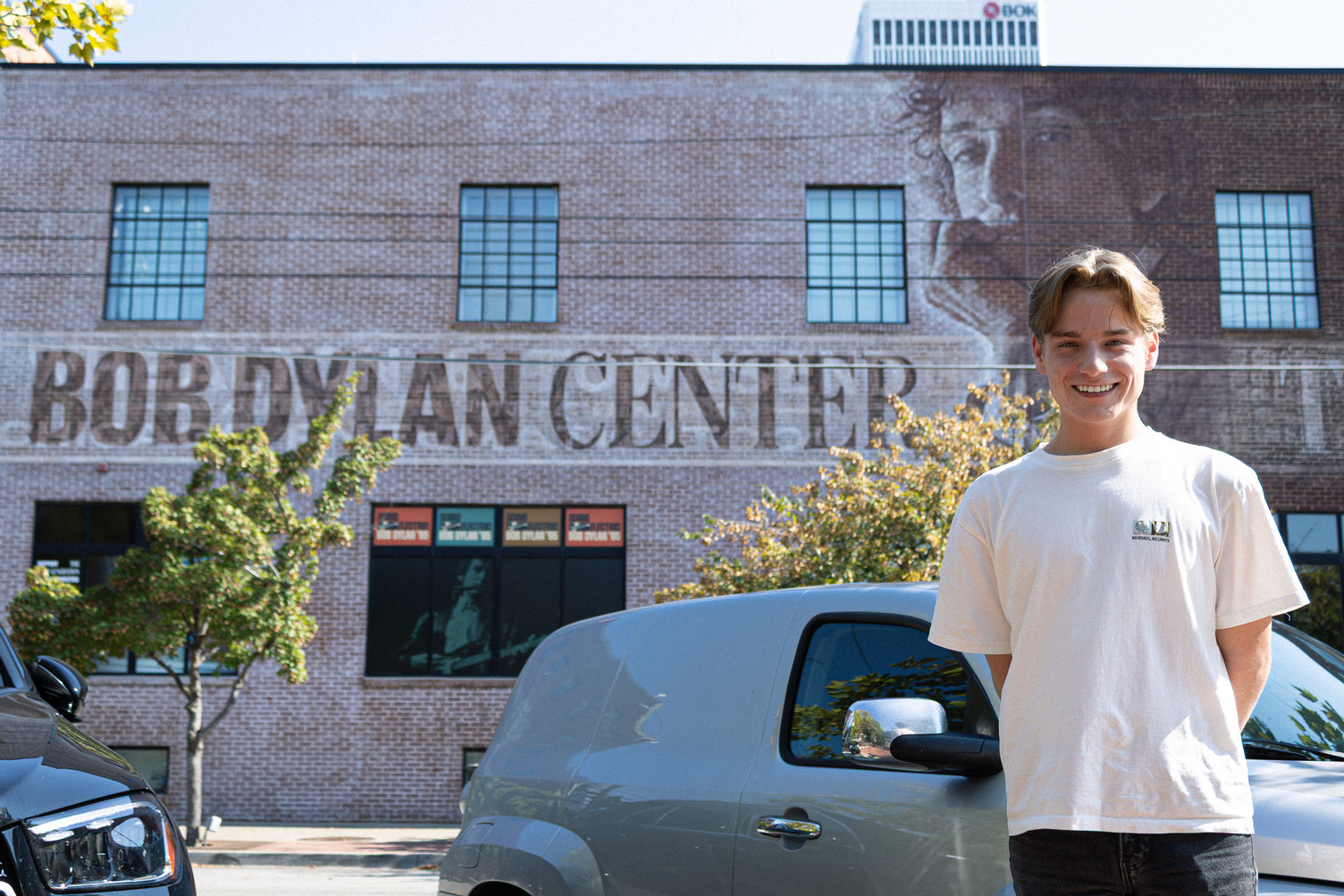 As a nursing major, the idea of becoming involved in the world of the humanities often feels like a myth in itself. The thought of a nursing student diving into the realm of pop culture and the deep historical resonance of artists like Bob Dylan seems counterintuitive to the rigid structure of a degree rooted in science and health care. Despite this, through the Tulsa Undergraduate Research Challenge program and Professor Sean Latham’s American Mythology project, I’ve been given an opportunity to reengage intellectual passions that have remained dormant since high school.
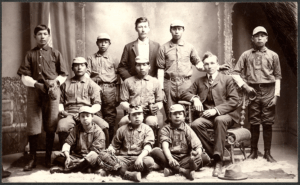
In high school, I was deeply fascinated by American history and the fine arts. As my curiosity grew, I turned to my American history textbooks, questioning what was included and, more importantly, what was left out. I noticed from fourth to eighth grade, my history textbooks included the story of Betsy Ross. A humble, widowed mother of seven, she was approached by Gen. George Washington to design a flag that would represent the United States. This recurring story was always accompanied by a caveat: There was no proof it had happened. So, why teach it?
At the library, I discovered that despite its baselessness, this fable was spread as part of a post-Civil War “cult of the flag.” The nation was hungry for patriotic revisionism, and Betsy Ross fit the bill. This myth became my introduction to the fascinating world of iconography. Thus, the story of Betsy Ross was a tool used to reassemble a fractured culture.
However, as I began to immerse myself in the rigorous demands of nursing, many of those interests were gradually set aside. That’s why attending the Bob Dylan conference was such a meaningful and revitalizing experience. It allowed me to reconnect with the world of cultural history and artistic expression. Thus, I had the chance to explore Dylan’s profound influence on American identity and cultural mythmaking, while also engaging with scholars and eccentric fans from across the globe (Italy, Canada, Netherlands and other countries), including faculty from New York University and Columbia.
More than anything, the experience reminded me of the connective power of the humanities. It’s incredible how a single individual, like Bob Dylan, can unite people across disciplines and backgrounds. During the panel sessions, cinematographers, journalists, poet-enthusiasts, musicians and scholars came together in dialogue, all in the name of one artist. In a time so often marked by division, witnessing that kind of unity was not only inspiring but reassuring. It affirmed for me that storytelling, whether through song, film or myth, continues to be one of the most powerful forces for human connection, and that even as a future nurse, I still have a place in that story.