



UTulsa’s inaugural Innovation Challenge gave high school students experience turning real-world challenges into practical solutions. Working in teams, students learned about customer discovery, prototyping and pitching while developing ideas that addressed accessibility, mobility, social connection and more. The initiative demonstrates how early exposure to innovation can build problem-solving skills, confidence and an entrepreneurial mindset, while strengthening the pipeline of future founders in Tulsa and across Oklahoma.
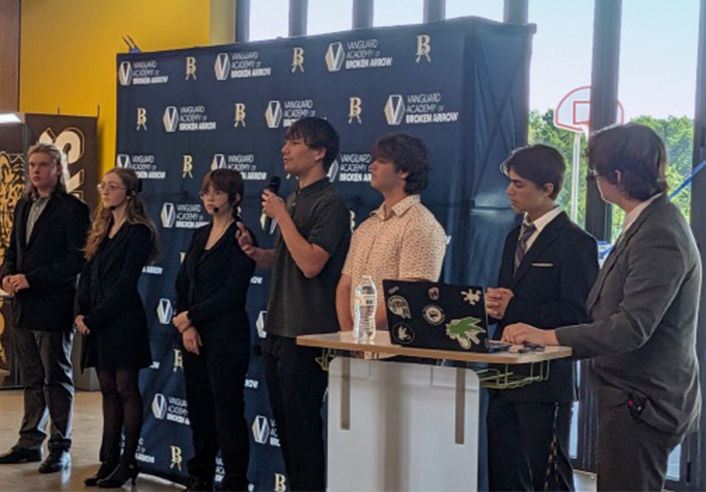
Most high school assignments end with a grade. This spring, more than 140 Broken Arrow Vanguard Academy students ended theirs by solving problems, building actual solutions and pitching ideas that could have real impact and earn real cash.
From reimagining mobility with a battery-powered wheelchair to designing a card game that helps students build friendships, these students spent eight weeks exploring challenges, refining solutions and presenting their concepts for $1,500 in prize money through the inaugural Innovation Challenge, a new program developed by The University of Tulsa’s Center for Innovation & Entrepreneurship (CIE).
Created in partnership with Vanguard Academy and GenCEO, the eight-week program introduced students to the entrepreneurial process from identifying community needs, problem identification, empathy mapping, customer discovery, prototype development and business pitch presentation. It challenged students to think creatively, collaborate with peers and design solutions.
CIE developed the program in conjunction with GenCEO to introduce students to entrepreneurship through hands-on experience. Vanguard Academy, a public high school built around project-based learning, provided an environment where students could apply those concepts. GenCEO is a Tulsa-based youth-focused organization that designs and deploys innovation programs for teens.
For Chris Wright, PhD., UTulsa’s assistant vice president for innovation and entrepreneurship, the challenge reflects the university’s commitment to cultivating future entrepreneurs in Oklahoma.
“We want to increase the pipeline of founders starting companies here in Tulsa,” Wright said. “We believe that starts by building relationships with local high schools. We want to help students cultivate that entrepreneurial mindset at a younger age. We are committed to developing more founders and innovative companies in Tulsa, and UTulsa and Hurricane Ventures are doing just that. During the past three years, we have invested in 15 companies that have created a $100 million economic impact in the Tulsa region.”
Over eight weeks, students worked in teams to move from idea development to final pitch. They identified real-world problems, tested assumptions through customer interviews and used tools such as the Business Model Canvas to refine value propositions, customer segments and potential impact. A strong emphasis was placed on empathy mapping and user feedback throughout the process. Artificial intelligence tools played a key role in the learning experience with students using development tools including Lovable to build prototypes and their business presentations.
The program culminated in a showcase where 23 teams presented their projects to community judges, with six advancing to a final pitch round to compete for $1,500 in prize money.
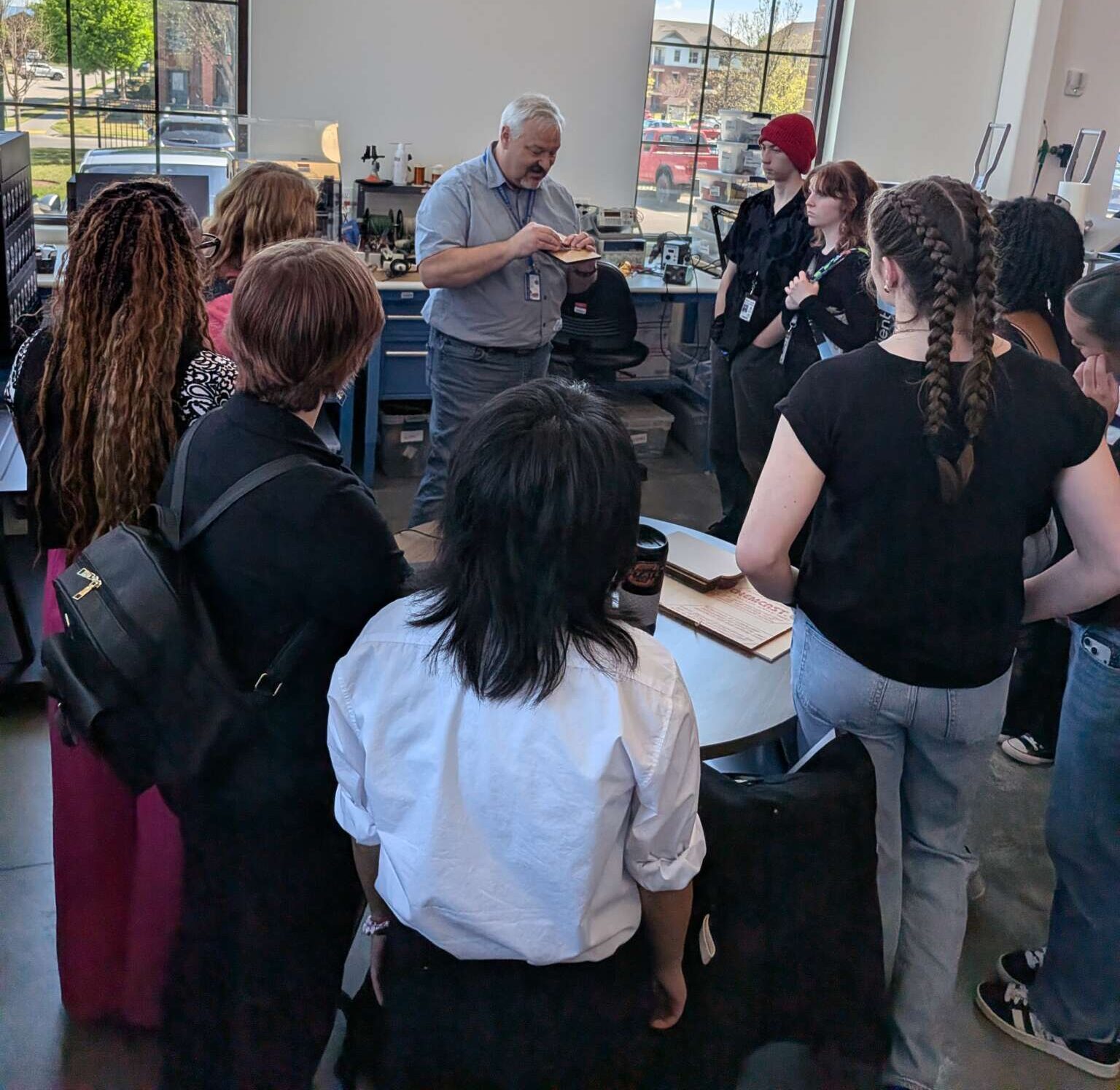
Students explored issues ranging from accessibility and mobility to social connection and daily student life. One team developed a concept for a more affordable, battery-powered wheelchair, complete with early blueprints, competitive analysis and prototype development. Another team created a card game designed to help students foster friendships during the school day. Intended for use during breaks and informal classroom time, the game encouraged conversation and relationship-building around shared interests.
Teams were encouraged to refine their ideas based on feedback throughout the program, incorporating mentor input into their final presentations and strengthening their problem definition and proposed solutions.
“The quality of the ideas and what they came up with in such a short period of time really blew me away,” Wright said.
Mandi Ford Argo, co-founder of GenCEO, said students demonstrated an extraordinary level of entrepreneurial thinking. “They just went so deep, which was amazing,” she said. “I’ve worked with enough early-stage adult founders that don’t do that. So, the fact that it was high schoolers who went that far was really, really impressive.”
She noted that students displayed strong customer awareness and feasibility thinking, including how their ideas would function in real-world systems.
While the Innovation Challenge concluded with final pitches and prototypes, Vanguard Academy STEM educator Reese Hundley said its impact was most visible in how students approached learning itself. Students switched from completing assignments to taking ownership of problems and solutions.
“Programs like this allow students to see purpose in what they’re doing,” he said. “We’re shifting from a task mindset to a growth-oriented mindset. That’s really what the world needs in the next generation of innovators.”
What’s next for the program?
“The University of Tulsa and GenCEO will expand this program to other high schools in Tulsa and the broader region,” Wright said. “At the end of next spring, we plan to invite the winning teams from each school to UTulsa for a Regional High School Innovation Challenge.”
Extending the format would bring students from across the region together to present their ideas in a shared environment, strengthening competition and collaboration.
The Innovation Challenge highlights how early exposure to entrepreneurship can shape the way students approach problem-solving and collaboration.
The program also reflects The University of Tulsa’s broader role in connecting higher education, local schools and community partners to strengthen Oklahoma’s innovation ecosystem. Through partnerships like this, UTulsa continues to expand opportunities for students to engage with entrepreneurship at an earlier stage.