


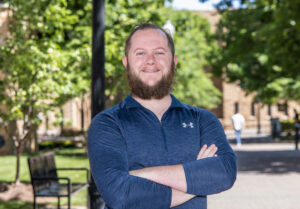



Since 2018, University of Tulsa Professor of Psychology Lisa Cromer has been collaborating with Tara Buck from the University of Oklahoma’s School of Community Medicine to uncover ways to treat chronic nightmares in children and teens. Now, the pair have teamed up with University of Rochester Medicine Assistant Professor Emily Kaier Cromwell (M.A. ’14, Ph.D. ’17) and current UTulsa doctoral student Lauren Prince to co-author a paper detailing a theoretical model for nightmare treatment in children that’s gaining international attention: the DARC-NESS model.
Nightmares can feel uncontrollable, causing the person experiencing them to fear sleep and wake more easily just to escape. When they never have a chance to give their brain a rest and “turn off” fear, children can develop a lack of confidence that keeps the nightmare cycle going. This feedback loop is not related to a single cause but an interaction of emotional, cognitive, behavioral and sleep-related factors.
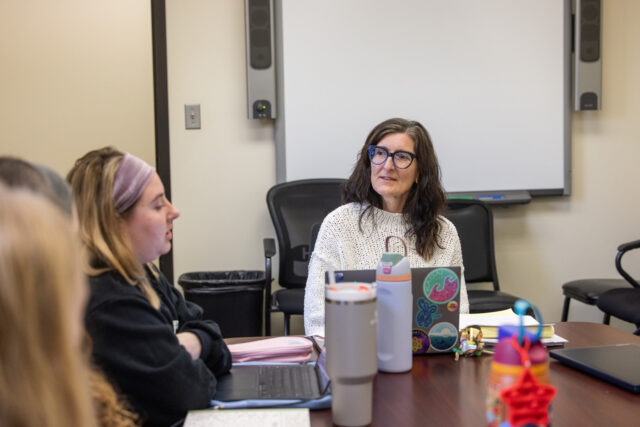
DARC-NESS focuses on building a sense of control in the patient, rather than focusing on the root cause of the nightmare, aiming to stop the feedback loop in its tracks. This model addresses the different factors that can contribute to chronic nightmares, including dream content and interpretation, the child’s ability to calm themselves, learned feelings of alertness and the child’s belief that they can control their nightmares, along with bedtime habits and quality of sleep.
“The DARC-NESS model places mastery at the center, emphasizing that children can learn skills to understand, respond to and gain control over their nightmares,” said Cromer. “Treatment is not just about reducing fear but building confidence and competence.”
The DARC-NESS model is designed to support cognitive-behavioral therapy approaches to treatment. Clinicians can use this model to help their patients build “nightmare efficacy,” weakening the feedback loop over time by helping them understand why nightmares happen, separating the problem from the patient’s identity and teaching them important coping skills, rather than just reducing their fear.
More importantly, it provides parents and other caregivers with a strategy to reinforce coping, encourage approach over avoidance and reframe the nightmare to support lasting improvement. “I see this work making treatment more accessible and empowering for families,” said Cromer. “The DARC-NESS model shows that nightmares are maintained by processes that children can learn to manage, opening the door to more effective, home-based support.”
Cromer is particularly interested in continuing to develop this self-help approach that parents and caregivers can use at home. “Over time, this could expand access, allowing more families to get support earlier, with clinical care available when needed.”
The new findings, published earlier this year in Frontiers in Sleep, have been reported in major U.S. news outlets and via media in Chile, Spain, Argentina, Germany, New Zealand and the Middle East. Learn more about the life-changing work happening in Cromer’s SPARTA lab (Study of the Prevention, Adjustment and Resilience to Trauma and Adversity).