


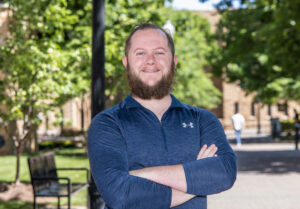



The University of Tulsa’s School of Cyber Studies proudly announces its first doctoral graduates in cyber studies: Abulfaz Hajizada and James Higgs. This milestone reflects the collective effort of the school’s faculty in fostering innovation and excellent cybersecurity research.
Higgs and Hajizada pursued their Ph.D. degrees driven by broad interests ranging from interface technology to digital literacy and online safety. Though their paths started off differently – Hajizada being a high school teacher and Higgs working as a business analyst in the private sector – their shared passion for cybersecurity led them to Tulsa.

“I have always been passionate about the life of the mind, and academia more broadly, and knew that I would one day pursue a doctoral degree,” Higgs said.
“My journey to a Ph.D. in cyber studies began with my career as a high school teacher, where I developed a passion for guiding others through complex subjects and saw firsthand the importance of digital literacy and online safety,” Hajizada explained. “That experience, combined with later work in industry, inspired me to explore how technology, economics and security intersect.”
The doctoral program’s interdisciplinary approach — blending policy, society and economics — sparked their interest. With a rich environment for exploration, both scholars found ample opportunities for research and application.
Higgs’ dissertation focused on cybercrime and money laundering in online video gaming. He examined how the adoption of microtransaction business models created an ecosystem where large scale virtual laundering occurs.
“Cybercriminals abuse the ability of in-game assets to function as a medium of exchange, as well as compromising gamer accounts to steal their in-game assets and accounts,” Higgs explained. “With the proliferation of digital payment technologies, cybercriminals are known to migrate to less tightly regulated domains. We saw this migration effect away from the physical world of cash to wire transfers, next to the abuse and exploitation of cryptocurrency.”
His research led him to being published in several journals, including Technology in Society, Computers & Security, the Journal of Money Laundering Control and the Journal of Information Systems Security. He was also featured in a broadcast news segment, in which he educated parents on how to keep children safe during online gaming.
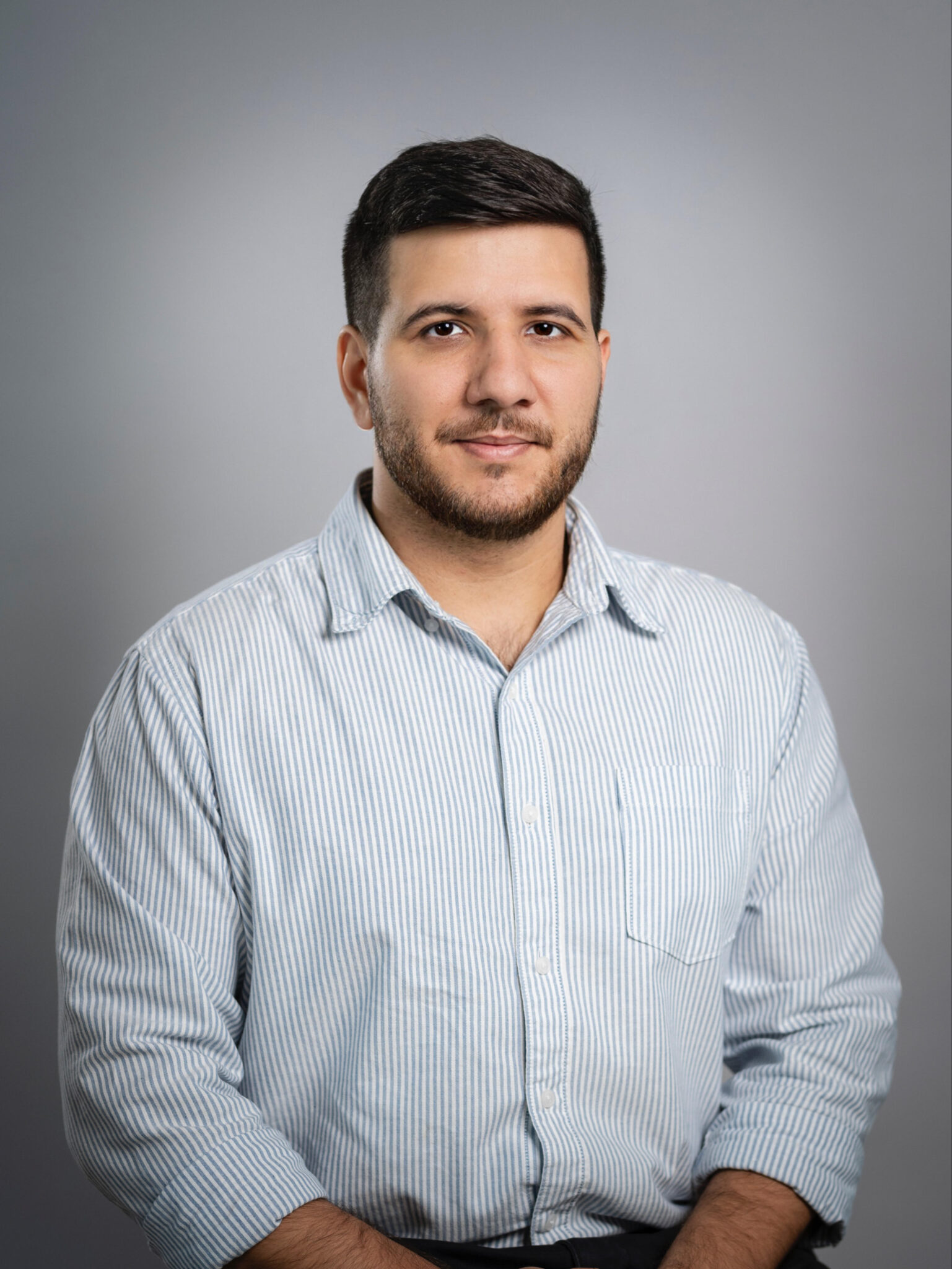
Hajizada’s research explored the economics of cybersecurity, focusing on how companies adapt after experiencing a cyberattack.
“I analyzed real-world data on publicly traded firms, looking at how they report incidents, change their security controls and shift relationships with cybersecurity vendors,” he explained. “The goal was to better understand not just the technical side of cybersecurity, but also the business incentives and trade-offs that shape how companies protect themselves in a rapidly evolving threat landscape.”
Hajizada noted that Tyler Moore, Ph.D., Tandy Endowed Chair in Cyber Security and Information Assurance, was pivotal to his research. Moore’s expertise in the economics of cybersecurity and his ability to synthesize academic standards with real-world experiences guided Hajizada.
“Professor Moore challenged me to think critically, refine my ideas and pursue questions that would have lasting impact, while offering constant support and encouragement throughout the process,” Hajizada said.
He plans to take his research and connect it to artificial intelligence, addressing its digital threats and create solutions to protecting organizations across the globe.
Both Higgs and Hajizada are international students. Higgs hails from South Africa, and Hajizada is from Azerbaijan. They emphasized that Tulsa became home to them. The tight-knit campus community and Graduate Student Association afforded them ample opportunities for relationships and networking. Higgs served as secretary for the GSA.
“I absolutely loved my time here. Not only did I grow tremendously as a researcher, but I also built lifelong friendships and connections,” Hajizada said.
“Tulsa is a great city. I have met a lot of amazing people over my three years here,” Higgs said.
“Congratulations to James and Abulfaz and the cyber studies faculty,” said Graduate School Dean Scott Holmstrom. “This milestone and the story of these accomplished international scholars highlights how graduate education at UTulsa fuels discovery and helps position Tulsa as a center for innovation and global talent.”
As the cyber studies program celebrates its first doctoral graduates, it underscores The University of Tulsa’s commitment to advancing cyber education and innovation at the highest level.