







When companies land on lists like “Most Admired,” “Best Places to Work” or “Fastest Growing,” the spotlight usually falls on culture, innovation or visionary leadership.
But Chris Crawford argues something else is quietly shaping those outcomes: executive compensation.
Crawford, CEO and co-founder of Zayla Partners, a Gallagher company, brought more than 25 years of strategic compensation and corporate governance experience to the Friends of Finance Executive Speaker Series at The University of Tulsa’s Allen Chapman Student Union in February. Crawford met with a group of Collins College of Business students before addressing alumni, executives and community members later that afternoon.
Throughout his career, he has advised more than 500 corporate boards, worked with Fortune 50 companies and helped guide organizations through volatile economic cycles and leadership transitions.
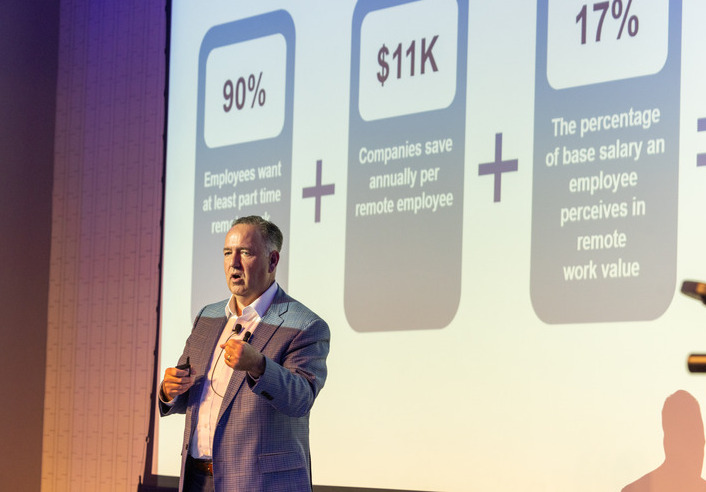
“Volatility is here to stay,” Crawford said, pointing to geopolitical instability, political shifts and rapid technological change. “CEOs don’t have the first clue what’s coming in two years.”
That uncertainty, combined with a tight labor market and a shrinking pipeline of experienced executives behind retiring baby boomers, has intensified what he described as a sustained war for talent. In that environment, compensation can no longer be reactive. It must be intentional.
Drawing from research analyzing top-performing companies across total shareholder return, growth and reputation, Crawford highlighted one defining trait: 70% of high performers had a clearly articulated compensation philosophy. Among lower-performing peers, that number dropped to roughly 30%.
“It seems like Compensation 101,” he said. “And yet so few times either they have no philosophy whatsoever or they have a lazy philosophy.”
One of the most significant shifts he outlined was the rise of long-term incentives. In 2007, roughly one-third of private companies offered long-term incentive programs. Today, that figure is closer to 70%. Rather than increasing fixed salaries, companies are tying more pay to multi-year performance metrics.
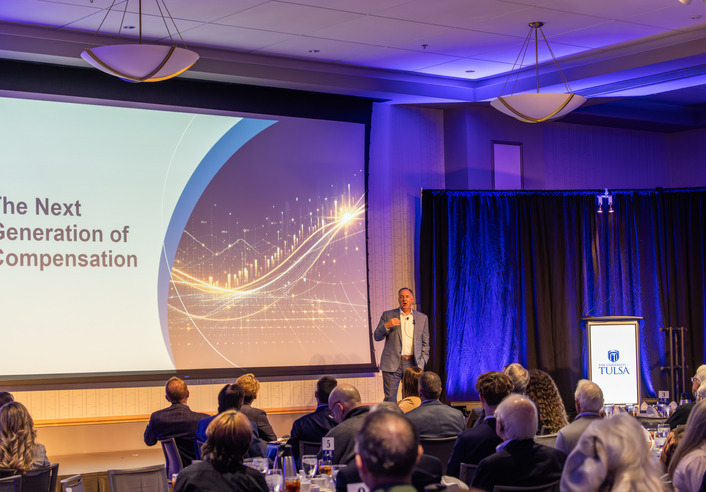
“They don’t want to put their bet on something that is fixed that they can’t take back,” Crawford explained.
He also examined how high-profile compensation models are reshaping expectations, most notably Elon Musk’s performance-based equity awards at Tesla. Musk’s compensation was tied almost entirely to aggressive growth milestones, awarding equity only if the company hit ambitious valuation targets.
The structure has tested traditional norms, sparked legal battles and prompted boards nationwide to reconsider how bold performance incentives should be designed.
At the same time, artificial intelligence is transforming the data behind pay decisions. AI is making compensation information “better, faster, cheaper,” Crawford said, giving employees clearer insight into their market value and pushing companies to defend their strategies with greater precision.
Still, he cautioned against viewing technology as a replacement for judgment.
“At the end of the day, compensation is the science of people,” Crawford said. “It’s informed by data. But the best decision-makers rely on human wisdom.”
For more information about the Friends of Finance Executive Speaker Series or to register for upcoming events, visit utulsa.edu/fof.