


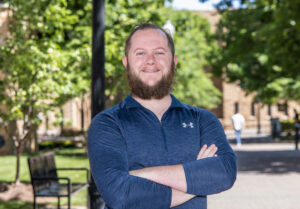


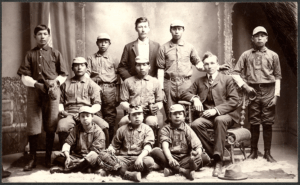
 The Modernist Journals Project (MJP) began at Brown University in 1995 with some graduate students, a sale on flatbed scanners, grant funding and a goal of digitizing early 20th-century literary and art magazines to make them freely available to the public on its website. Thirty years later, the project has expanded to include The University of Tulsa and has completed the digitization of 26 magazines and anthologies.
The MJP joined UTulsa when senior project adviser Sean Latham, the Pauline McFarlin Walter Chair in English & Comparative Literature, established a branch in 2003. Now, the UTulsa arm of the project is managed by Jeffrey Drouin, the Frances W. O’Hornett Associate Professor of Literature.
Instead of a flatbed scanner, graduate students now receive professionally scanned images from magazines and run them through optical character recognition software. The software reads the text in the scan and creates an electronic transcript that the students then correct and package into high-quality PDF files along with electronic text and metadata for computational analysis.
UTulsa’s McFarlin Library provides the digital infrastructure that makes the collection accessible and sustainable. “Through our digital archives platform, the library ensures the materials are expertly preserved, discoverable and integrated into the university’s research ecosystem,” said Jill Krefft, who serves as the R.M. & Ida McFarlin Dean of the Library.
Next, advanced search and filtering features run on the metadata that the students encode in the text with extensible markup language. “For the graduate students who have worked on the project, it’s excellent training in electronic editing and data encoding,” Drouin said.
Digitizing these magazines can help push the envelope of humanities research. “You can do things like generate social network graphs and run a script that goes through all the data in the MJP,” Drouin said. “Through that, we’ll discover what magazines an author was publishing in, when and who else was publishing there.” This allows researchers to see connections that may have otherwise gone unnoticed. “Some person writes something here, then that gets read by another person over there and changes the way they write just a little bit,” he explained. “You get some unexpected results.”
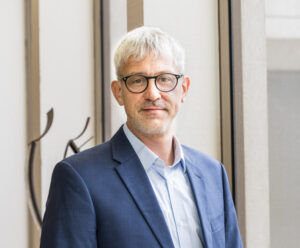
Through the years, Drouin has been pleasantly surprised to come across works that haven’t been studied before, such as those of writer Ben Hecht. “He would write these really interesting and edgy prose poems about New York, Chicago or some moment. It was good writing,” Drouin said. “I started looking into him, and it turns out that after being a contributor to ‘Little Review’ he went on to be a screenwriter in Hollywood writing gangster movies.”
Discoveries like these often work their way into research findings by graduate students, who take some of the authors they discover and add them to their dissertations. “It prompts you to think in all of these different ways you hadn’t before,” remarked Drouin. “All of a sudden, you see all of these other possibilities and ways to think about literature and your own projects.”
Recently, Drouin and the MJP were awarded a grant from the National Endowment for the Humanities to expand the database. The funds will allow the MJP to continue to enhance and increase the collection by adding African American magazines such “The Crisis,” “The Messenger” and “Fire.” The project will also add literary magazines that have not previously been accessible, like New York’s “The Dial” and London’s “The Criterion.”
These additions will allow the database to make broader connections. “It just takes time and diligence,” Drouin said. “Then suddenly, it fills in a big piece of the world that you didn’t realize was there before.”
McFarlin Library and the MJP are excited about the new additions. “This investment not only anchors the collection at the university but also creates the foundation for future expansion and scholarly engagement,” Krefft said.
Drouin noted that what exists in the current MJP database is merely the tip of the iceberg: “Now, we can continue to extend the story beyond that.”
(Any views, findings, conclusions, or recommendations expressed in this article do not necessarily represent those of the
National Endowment for the Humanities.)