



Tulsa’s unhoused community is large, disparate and expanding. Since 2021, homelessness has increased in the city by 8.6%, outpacing the overall population growth. In addition to the challenge of finding food and shelter, many of these people face immense barriers to health care access.
To address this critical shortcoming, Cassy Abbott Eng, executive director of The University of Tulsa’s School of Nursing and president of the Oklahoma Nurses Association, created the Student Community Resource Unit for Baseline Support (S.C.R.U.B.S.) in 2024. “This mobile health model leverages the knowledge and skills of student nurses – a truly underutilized resource – to work directly with members of our community who are in desperate need of prevention and early intervention,” explained Eng, who holds the Susan K. Gaston Endowed Chair in UTulsa’s Oxley College of Health & Natural Sciences.
S.C.R.U.B.S. enables the School of Nursing to give its undergraduate and graduate students meaningful experiential opportunities tied to clinical and practicum courses. “The model also helps our students develop their organic empathy and advocacy skills, while relieving some pressure on overburdened hospital emergency departments,” noted Eng.
Delivering frontline care
Each week during the fall and spring semesters, S.C.R.U.B.S. deploys a team of four student nurses, one nursing faculty member and one student or faculty member from another academic program to shelters and sites along Tulsa’s main public transportation routes. During these clinics, the students provide clients with baseline health assessments, health literacy and education, information about relevant resources and individualized next steps.
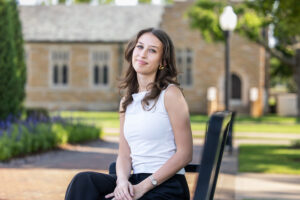
For Meghan Dsouza, a junior in UTulsa’s nursing program, involvement with S.C.R.U.B.S. is the perfect hands-on opportunity to understand how health care resources can be made available directly to underserved populations. “One of my main roles is mapping and analyzing available community resources to identify gaps where mobile health outreach could have the greatest impact,” she said. “Being part of this initiative has been valuable both personally, in showing me the importance of community-centered care, and professionally, in giving me early experience with innovative models of care delivery.”

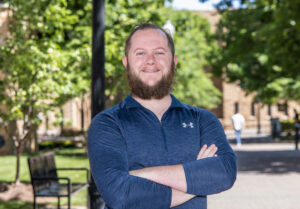
One of the organizations whose clients S.C.R.U.B.S. members assist is John 3:16 Mission, a nonprofit that provides emergency shelter, food, job training and other services to Tulsa’s unhoused and other at-risk populations. Hunter Telford is John 3:16’s director of work experience and guest services. “The quick and convenient medical screening the S.C.R.U.B.S. team delivers for our unhoused friends and neighbors gives them insight into their health and has empowered many of them to follow up with a primary care physician,” Telford commented. “Through this partnership, UTulsa is promoting the importance of health among the people we serve, and we are so grateful for what they are doing.”
A model of care for all
The need for and value of S.C.R.U.B.S. is evident from the ongoing requests Eng receives to send the unit to various locations and events around the city. Based on its success in Tulsa, plans are underway to expand across Oklahoma’s 77 counties and the country at large, both in urban centers and rural areas.
But over and above the goal of improving clients’ health, Eng said she created the model “with the hope that it would blaze a trail and challenge other nursing programs to own the health of their communities.” Eng’s aspiration was not misplaced: Each week, she hears from program leaders at other institutions requesting details. In addition, based on the results and lessons learned to date, Eng has submitted S.C.R.U.B.S. for adoption as an official model of care to be included in nursing textbooks and other educational materials.
In recognition of her overall health care leadership and the S.C.R.U.B.S. project, Eng has been selected as a Fellow of the American Academy of Nursing – one of only two new fellows from Oklahoma this year. The induction ceremony will take place at the AAN’s 2025 Health Policy Conference in Washington, D.C.