



At Oxley College of Health & Natural Sciences, researchers are making strides to understand the chemical causes of certain neurological disorders and how compassionately and effectively to care for people with dementia.
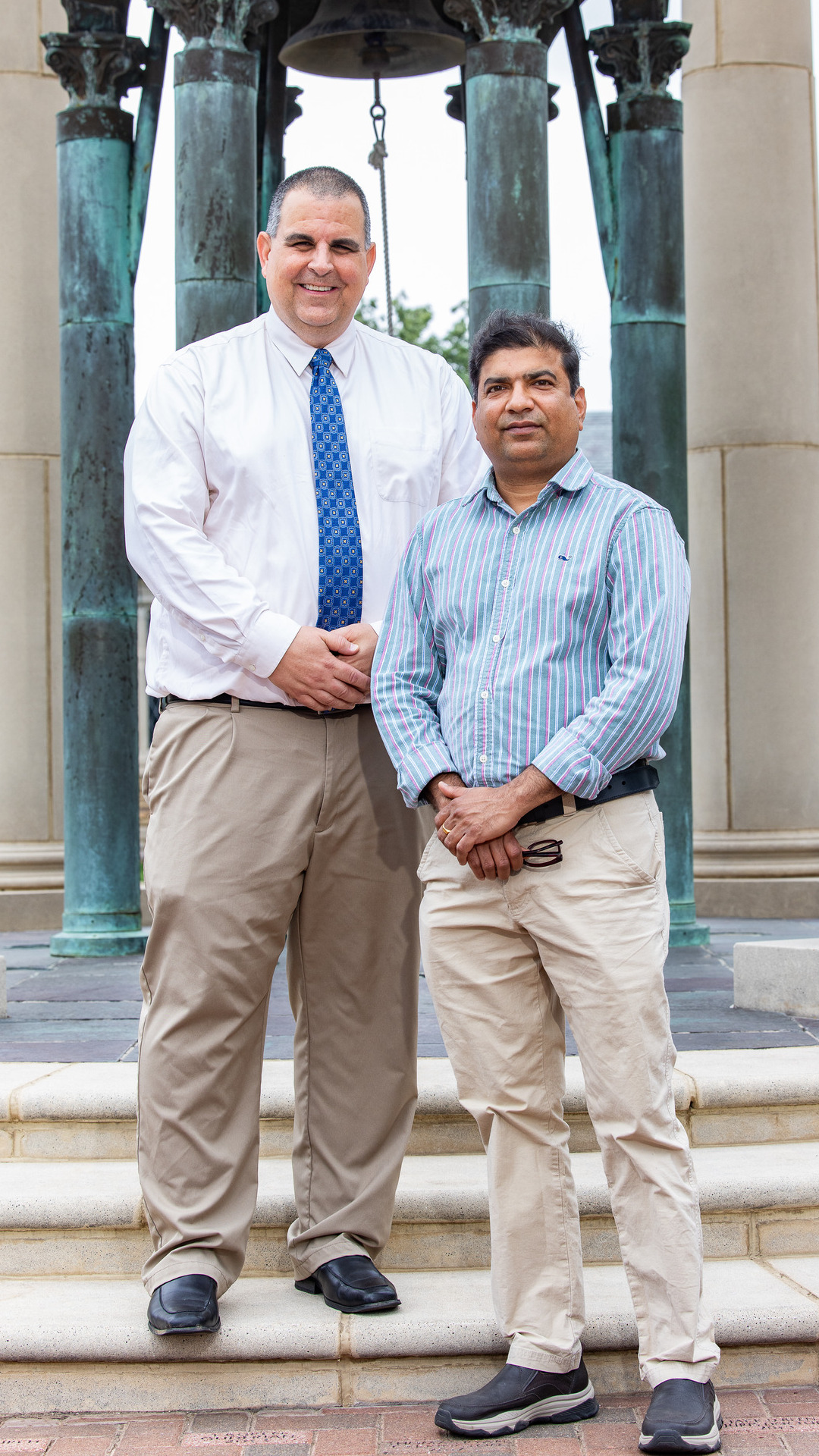
Assistant Professor of Chemistry & Biochemistry Pradeep Kurup integrates biochemical, cellular and genetic approaches to uncover mechanisms that can guide new strategies for preventing and treating neurodegenerative disorders and neuropsychiatric illnesses, such as seizures and cognitive deficit disorders. Meanwhile, Assistant Professor of Nursing Bill Buron has been advancing how we understand and deliver care to individuals living with dementia, particularly those in the later stages of the disease.
Molecular minds
“In my lab, we explore genetic and environmental factors, such as heavy metal and pollutant exposure, that contribute to synaptic dysfunction and neurodegeneration,” Kurup explained. “The goal of our work is to define how altered signaling pathways drive disease outcomes.”
Building on studies he conducted during a postdoctoral fellowship at Yale University, Kurup conducts research on the regulation of neuronal signaling at the molecular, cellular and functional levels. He particularly emphasizes the roles of kinases and phosphates in brain disorders that affect learning and memory.
To date, his most notable accomplishment has been the discovery of a novel regulation of Striatal-Enriched Protein Tyrosine Phosphatase (STEP) by the ubiquitin-proteasome system. “In connection with this discovery, I have been able to show how dysregulation of this pathway can lead to synaptic dysfunction and cognitive deficits associated with Alzheimer’s disease, Parkinson’s disease and schizophrenia,” Kurup commented.
He carries out his investigations with three University of Tulsa colleagues: Kenneth Roberts and Angus Lamar of the Department of Chemistry & Biochemistry and Xinxin Wang of the Department of Physics & Engineering Physics. Kurup also collaborates with David Wallace and Swarup Mitra at Oklahoma State University. In addition, Kurup draws on the efforts of undergraduate and graduate student researchers.
Five Tulsa Undergraduate Research Challenge (TURC) participants joined Kurup’s lab in 2025, working on various projects during the summer and presenting their results at UTulsa symposia and American Chemical Society conferences. “These brilliant students conducted feasibility studies for my inquiries and, in return, they got a glimpse of how university-based research functions while bridging their classroom knowledge with practical training,” he noted.
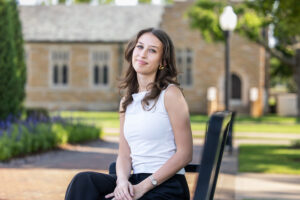
One of those students was Maya Roberts (B.S. ’26). Set to begin doctoral studies in chemistry at Rice University this fall, after her TURC summer, Roberts stayed on as a research assistant in Kurup’s lab. Her work entailed preparing samples, running Western blots, analyzing protein expression and interpreting results to understand what changes might mean for pathways involved in neurodegeneration. In recognition of Roberts’ contributions and accomplishments, the Department of Chemistry & Biochemistry awarded her its 2026 Outstanding Undergraduate Research Assistant Award.
“I am so grateful for Dr. Kurup’s mentorship,” Roberts said. “Assisting in his lab helped me build technical and critical thinking skills, and I gained experience with biochemical research methods and became more confident working independently. I also learned how to think through experimental design, troubleshoot unexpected results and connect our finding to questions in neuroscience.” Additionally, she said she grew as a communicator, a skill she put into practice by sharing her findings at the ACS conference in Atlanta and the Oxley College Research Day.
Enriching and expanding such opportunities for students, Kurup plans to establish a neuroscience research program that provides structured training. “My overarching goal,” Kurup remarked, “is to prepare students to pursue impactful neuroscience research and to empower them to address mental health challenges at the local, national and global levels.”
Reconceptualizing dementia care
What does it mean to remain a person when memory fades, communication becomes difficult and identity is no longer easily expressed? When someone can no longer tell us who they are or what they need, what ensures we still recognize and treat them as a person?
For two decades, these questions have been at the heart of Bill Buron’s research and teaching. In 2008, he launched the first iteration of the Personhood Model for Dementia Care (PMDC). “This theory-driven, practice-guiding framework reconceptualizes dementia care as an interpretive and relational practice,” he explained. “Its central, grounding premise is that personhood is not lost in dementia. It is either supported or diminished through the actions of others.”
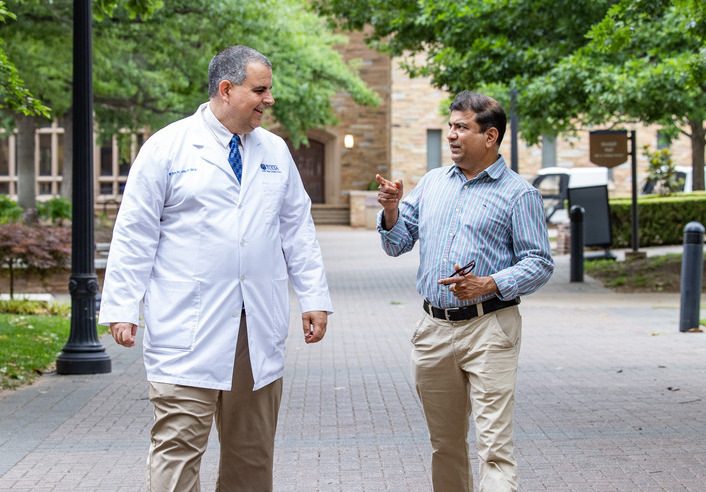
While dementia alters memory, communication and behavior, Buron’s work rests on the idea that the disease does not eliminate the person. “Instead, it’s our access to that person – your grandmother, your spouse, your friend – that erodes and becomes increasingly difficult,” he said.
The PMDC has evolved into a sustained and cohesive program of research examining personhood across disease progression, care environments and emerging clinical innovations. Bridging theory, empirical inquiry and clinical applications, the model shifts the direction of dementia care through what Buron describes as a “deliberate movement between conceptual development and real-world application.”
One of the PMDC-driven interventions is life-history collaging. Aimed at enriching nursing staff knowledge of residents’ identities, preferences and experiences, these resulted in measurable improvements in staff understanding and the deployment of more individualized approaches to care. Buron’s research has also activated the PMDC to examine how personhood is experienced within specific populations – for example, men – and care contexts, such as nursing homes. During the COVID-19 pandemic, he shone a light on the impact of prolonged isolation, staffing instability and policy constraints on the erosion of sociologic, individual and biologic personhood among care-facility residents living with dementia.
Similar to Kurup, Buron enlists the aid of TURC students – drawn from UTulsa’s nursing program – who engage in research grounded in the PMDC framework. “Mentoring these brilliant students, who are integral to my research, is deeply satisfying,” he said. “I am proud of their quest to address real-world challenges in dementia care.”
With Buron’s guidance, rising senior Meghan Dsouza has taken an active role in carrying out many aspects of the PMDC project. “Attentive and compassionate care is extraordinarily important for individuals with dementia, many of whom are especially vulnerable because they may not fully understand or be able to communicate what they are experiencing,” observed Dsouza, president of UTulsa’s Student Nurses’ Association.
Her contributions have included refining research processes, preparing institutional review materials, coordinating with senior-living facilities and managing the logistics of field-based elements. Currently, she is immersed in an investigation of a potential link between earwax buildup and the progression of dementia, particularly in lower-income senior-living facilities. Part of this study will entail conducting otoscopic exams to better understand whether untreated hearing-related issues may contribute to cognitive decline and quality-of-life concerns among residents with dementia.
“Working with Dr. Buron has given me valuable insight and exposure to the realities of clinical research,” noted Dsouza. “One of the most meaningful aspects has been seeing how person-centered dementia care extends beyond traditional treatment approaches to include identifying overlooked factors that may affect cognition, comfort and daily functioning. As a nursing student, being able to combine research with hands-on clinical relevance has been immensely rewarding.”
Thanks, in part, to students’ contributions, Buron’s PMDC is seeing increasing use as a guide to informing new directions in high-quality dementia care.
“I began and am continuing my research in order to contribute to a meaningful shift in how dementia care is conceptualized and delivered,” commented Buron. “With the evolution and application of the PMDC, I believe we can ensure personhood remains central, even in contexts where it is most at risk of being overlooked.”
Chart new paths
Students at Oxley College of Health & Natural Sciences avidly contribute to research that opens fresh horizons in science and care delivery. We welcome you to join us in creating a better world for all.